
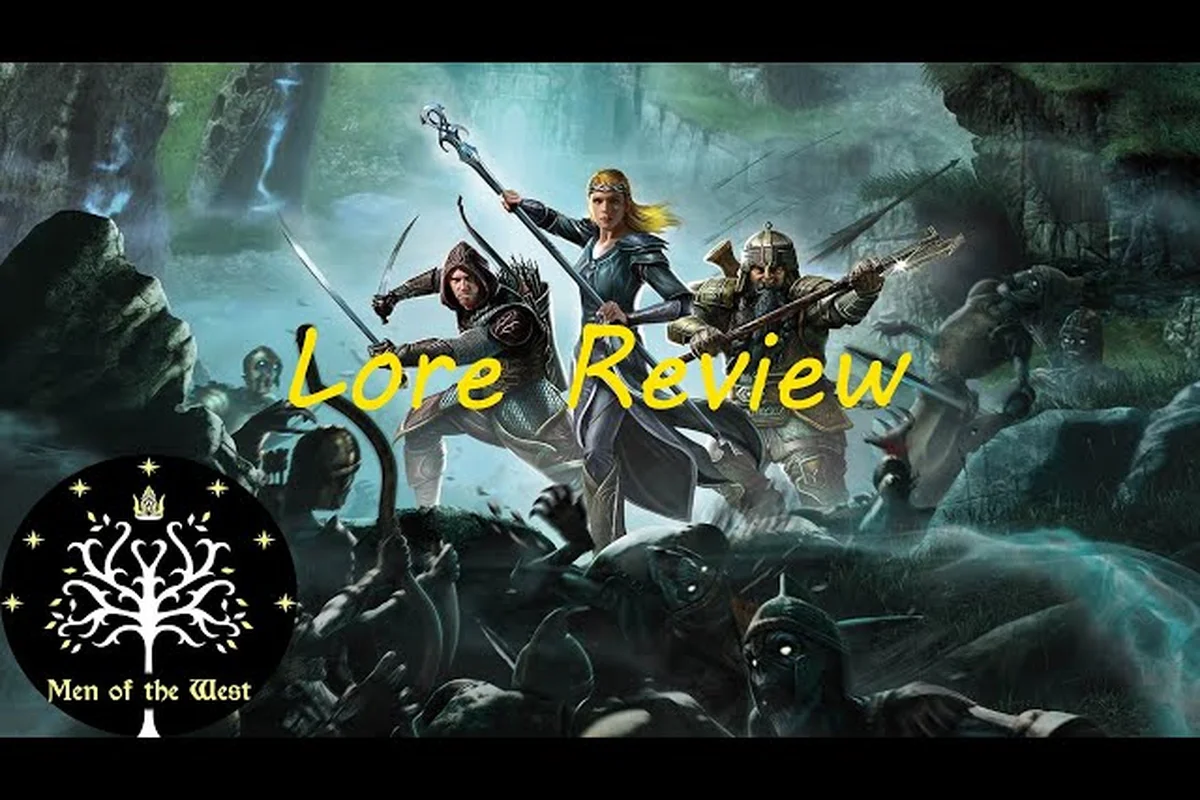
The Lord of the Rings: War in the North - Legacy Edition pulls its premise from a single, easily missed line in The Return of the King where Gandalf mentions battles fought by "a few heroes in the North" while the Fellowship's attention stayed on Mordor. That throwaway sentence, paired with Appendix A's account of Durin's Folk, became the foundation for an entire game that fills in a blank chapter of Tolkien's legendarium. Understanding the War in the North books vs game relationship matters because it separates what Tolkien actually wrote from what Snowblind Studios invented to make a playable action RPG. This guide walks through every canon touchpoint, the invented characters, and where the game quietly contradicts established lore.
Canon Foundations: What Tolkien Actually Wrote
The game's creative team built the entire narrative around two specific textual anchors. The first is Gandalf's speech in The Return of the King, delivered to Aragorn and the others before the final march on the Black Gate, where he mentions that the north had its own war raging while the south faced Sauron's main assault. The second anchor comes from Appendix A Part III, the section covering Durin's Folk, which records that the dwarves of Erebor and the Iron Hills fought a desperate campaign against Sauron's forces from the north. According to the Wikipedia summary of the game's plot, these two passages provided the scaffolding for the entire campaign, making War in the North the first game to draw from both the novels and the film trilogy simultaneously.
The locations the game uses are almost entirely drawn from real canon geography. Fornost, the ruined capital of Arnor, appears as a major dungeon and was the site of the historical Battle of Fornost where the Witch-king of Angmar was defeated centuries before the War of the Ring. Carn Dûm, the Witch-king's old capital in Angmar, serves as the game's climactic fortress. Mount Gundabad, the ancient dwarf homeland that fell to orcs, anchors the fourth chapter. Sarn Ford, the crossing point on the Brandywine River, and the Barrow-downs both appear as early-game locations. The one original creation is Nordinbad, a dwarf settlement in the Ettenmoors that has no counterpart in Tolkien's writings.
The Appendix A Connection
The dwarven storyline in particular draws heavily from Appendix A's account of the War of the Dwarves and Orcs and the later battles during the War of the Ring. The game places Farin, one of the three playable heroes, as a dwarf warrior from the north who fights alongside his kin against the orc legions pouring out of Gundabad. While Farin himself is invented, the broader conflict he participates in is historically grounded in Tolkien's timeline. The appendix records that the dwarves of the Iron Hills and Erebor fought Sauron's forces from the north while the Fellowship was occupied in the south, which is exactly the window the game exploits.
Gandalf's Line as Narrative License
The genius of the premise is how it treats Gandalf's line as a blank check. Tolkien never elaborated on who those "few heroes" were, what battles they fought, or how their struggle connected to the main plot. The game fills that void with Eradan, Andriel, and Farin, three original heroes whose journey from Sarn Ford to Carn Dûm represents the northern campaign in miniature. This approach lets the developers honor the canon while still creating a fresh story with genuine stakes, since the outcome of the northern war directly affects whether Sauron's forces can reinforce Mordor.
Original Characters vs. Named Canon Figures
The War in the North characters explained section of any lore discussion has to separate the invented protagonists from the genuine Tolkien figures who make cameo appearances. The three playable heroes are entirely original creations with no textual basis, but the game surrounds them with a supporting cast drawn directly from the books. Elladan and Elrohir, the twin sons of Elrond, appear as quest-givers and allies. Halbarad, Aragorn's kinsman and standard-bearer from the Grey Company, shows up with the Rangers of the North. Elrond himself appears in Rivendell, Gandalf passes through with cryptic warnings, and Aragorn briefly crosses paths with the party before heading south on his own journey.
The game also includes Gwaihir, the Great Eagle who rescues Gandalf from Orthanc and later serves as a mount in the films, plus Beleram, an original eagle character who becomes a summonable ally. The Bagginses are mentioned in passing, tying the game's timeline to the main events of the novels. What makes this cast list notable is how the game handles the canon figures: they never overshadow the original heroes, but their presence grounds the story in the larger legendarium.
| Character | Canon Status | Role in Game | Source Material |
|---|---|---|---|
| Eradan | Original | Playable Ranger hero | None — invented |
| Andriel | Original | Playable Elf Loremaster | None — invented |
| Farin | Original | Playable Dwarf Champion | None — invented |
| Elladan & Elrohir | Canon | Quest-givers in Rivendell | The Fellowship of the Ring |
| Halbarad | Canon | Ranger ally | The Return of the King |
| Gandalf | Canon | Cameo, plot guidance | The Lord of the Rings |
| Aragorn | Canon | Brief appearance | The Lord of the Rings |
| Beleram | Original | Summonable Great Eagle | None — invented |
| Gwaihir | Canon | Eagle ally in final battle | The Lord of the Rings |
The Agandaûr Problem
The game's primary antagonist, Agandaûr, is a Black Númenórean sorcerer serving Sauron directly, and he is entirely invented for the game. Tolkien's writings mention Black Númenóreans as a people who fell to Sauron's influence after the Downfall of Númenor, but no specific character named Agandaûr exists anywhere in the legendarium. For a deeper look at how this antagonist fits into the broader mythology, the Agandaûr explained guide breaks down his role as a Black Númenórean and how his invented backstory connects to the canonical Witch-king of Angmar.
The Eagle Question
Beleram's existence raises an interesting canon question because Tolkien established that the Great Eagles were ancient beings created before the Elves, with their own language and society. The game treats Beleram as a younger eagle who bonds with Eradan, which is consistent with how Tolkien portrayed the eagles as intelligent, independent beings who chose their allies rather than serving anyone. The game's depiction of Gwaihir in the final battle also matches his canonical role as the eagle who aided the Free Peoples during the War of the Ring.
Timeline Placement and the Northern War
The War in the North books vs game timeline comparison requires understanding exactly when the game's events occur relative to the novels. The campaign runs parallel to the main events of The Lord of the Rings, starting around the time the Fellowship leaves Rivendell and concluding before the Battle of the Morannon at the Black Gate. This parallel structure is deliberate, allowing the game to reference events like the Council of Elrond and the departure of the Fellowship without directly interfering with the main storyline.
The game's version of the northern war is far more concentrated than anything Tolkien described. In the books, the north saw multiple simultaneous conflicts: the dwarves and men of Dale fighting Easterlings, the elves of Mirkwood battling Sauron's forces at Dol Guldur, and the Rangers of the North skirmishing with orcs throughout Eriador. The game compresses these into a single campaign against Agandaûr's forces, which is a simplification but not a contradiction, since Tolkien never provided a detailed account of every northern battle.
| Timeline Event | Book Canon | Game Portrayal |
|---|---|---|
| Council of Elrond | October 25, 3018 TA | Mentioned, not shown |
| Fellowship departs Rivendell | December 25, 3018 TA | Background event |
| War in the North | Multiple fronts, vaguely described | Single campaign vs. Agandaûr |
| Battle of Fornost | Historical, fought in 1975 TA | Referenced as ancient history |
| Fall of Carn Dûm | Witch-king's capital, abandoned | Game's climactic fortress |
The Battle of Fornost Connection
The game heavily references the Battle of Fornost, which Tolkien recorded as the decisive defeat of the Witch-king's forces in 1975 of the Third Age. That battle ended Angmar as a kingdom and drove the Witch-king south to Mordor, where he eventually became the Lord of the Nazgûl. The game treats Fornost as a haunted ruin filled with the remnants of that ancient conflict, which matches the canonical description of the city as a cursed and abandoned place. The connection between the Witch-king's defeat at Fornost and his later role in the War of the Ring is a key piece of the War in the North lore that the game uses to justify why Carn Dûm matters in the present conflict.
Sarn Ford and the Rangers
The opening chapter at Sarn Ford references a canonical event: the Rangers of the North guarded the crossings of the Brandywine to slow Sauron's forces from entering the Shire. Tolkien recorded that the Rangers fought a delaying action at Sarn Ford on October 30, 3018 TA, allowing the hobbits to escape westward. The game expands this into a full opening level where the party helps the Rangers hold the ford against Agandaûr's orc legions, which is consistent with the books while adding dramatic weight to a battle Tolkien only mentioned in passing.
Movies vs. Game: Visual and Narrative Divergences
The War in the North movies vs game comparison is trickier because the game draws from both the novels and Peter Jackson's film trilogy, sometimes blending them in ways that create inconsistencies. The game's visual design clearly borrows from the films, particularly in its depiction of Rivendell, the design of the orcs, and the general aesthetic of Middle-earth. However, the narrative follows the books more closely, especially in its treatment of characters like Elladan and Elrohir, who appear in the novels but were cut from the theatrical editions of the films.
The most significant divergence from the films is the game's treatment of the Witch-king of Angmar. In the films, the Witch-king is a terrifying presence at the Battle of the Pelennor Fields, and his backstory as the ruler of Angmar is only briefly referenced. The game goes further, making the Witch-king's legacy central to the northern campaign through the ruins of his old kingdom and the lingering corruption of Carn Dûm. This is more faithful to the books, where the Witch-king's northern history is documented in the appendices, than to the films, which barely acknowledge it.
| Element | Book Canon | Film Trilogy | War in the North |
|---|---|---|---|
| Elladan & Elrohir | Appear in novels | Cut from theatrical | Quest-givers |
| Witch-king's history | Detailed in appendices | Brief mention | Central backstory |
| Northern war | Vague references | Not depicted | Full campaign |
| Great Eagles | Gwaihir named | Gwaihir appears | Beleram added |
| Carn Dûm | Abandoned ruin | Not shown | Climactic fortress |
The "Decent Heroes" Constraint
One of the more interesting production details is that Middle-earth Enterprises, the licensing body that controls Tolkien's intellectual property, imposed a specific constraint on the game's writing. According to the Wikipedia reception summary, the license holders required that the heroes remain decent and kind, which meant the dialogue system could not include moral branching or allow players to make evil choices. This is a notable departure from other action RPGs of the era, which often included moral choice systems, and it reflects the strict control Tolkien's estate and license holders maintain over how Middle-earth characters behave.
The Legacy Edition Changes
The Legacy Edition rerelease bundles all the original deluxe and pre-order DLC with a quality-of-life patch, but it does not alter the game's narrative or lore content. The story, characters, and canon connections remain identical to the 2011 original, which means the War in the North books vs game comparison applies equally to both versions. The main differences are technical, such as improved performance on modern hardware and the inclusion of previously exclusive content.
Canon Contradictions and Creative Liberties
No adaptation of Tolkien's work can avoid some contradictions, and War in the North has its share. The most obvious is the game's treatment of Mount Gundabad, which Tolkien described as the ancient homeland of the dwarves that had been defiled by orcs long before the War of the Ring. The game depicts it as an active stronghold of Agandaûr's forces, which is consistent with the general idea that orcs controlled the mountain, but the game adds a level of military organization and infrastructure that Tolkien never described.
The game also compresses the geography of Middle-earth significantly. Travel between Sarn Ford, Fornost, Rivendell, the Ettenmoors, and Mount Gundabad would have taken weeks or months in the books, but the game treats them as a series of short journeys. This is a necessary concession to game design, but it does create a sense of scale that differs from the novels. The Ettenmoors, which Tolkien described as a wild and largely uninhabited region, become a major battleground in the game, which is plausible but not directly supported by the texts.
The Timeline Compression Issue
The game's timeline is also compressed relative to the books. The entire northern campaign appears to take place over a matter of weeks, while the events of The Lord of the Rings span roughly a year from the Council of Elrond to the destruction of the Ring. The game's events could theoretically fit within that year, but the sense of urgency and rapid travel makes it feel much shorter. This is a common issue in video game adaptations, where the need for continuous action conflicts with the slower, more deliberate pace of Tolkien's narrative.
The Role of the Elves
The game gives the Elves a more active military role than Tolkien typically described during the War of the Ring. While Elven forces did fight at the Battle of Dale and in Mirkwood, the game shows Elven warriors engaging in open battle in the Ettenmoors and at Carn Dûm. This is not a direct contradiction, since Tolkien never fully detailed the northern Elf involvement, but it does reflect a more aggressive Elven posture than the books suggest. The game's portrayal of Andriel as a frontline combat mage is also a departure from the more reserved, support-oriented role Elves often played in Tolkien's writings.
Practical Lore Guide for Players
For players who want to experience the game with a fuller understanding of its canon connections, a few practical observations help. The game rewards players who know the source material, since many of the locations and characters carry weight that the game itself does not always explain. Recognizing that Fornost was the site of the Witch-king's defeat, or that Halbarad is destined to die at the Pelennor Fields, adds emotional depth to scenes that might otherwise feel like simple quests.
The game also includes numerous collectible lore items that expand on the history of the northern regions. These items draw heavily from the appendices, particularly the sections on the kingdoms of Arnor and Angmar. Players who collect these items will gain a much richer understanding of how the game's story fits into the larger legendarium, and the chapter 3 guide covers where to find many of these lore objects during the Rivendell and Ettenmoors sections.
Recommended Reading Order
For players who want to verify the game's canon claims, the most useful Tolkien texts are the appendices to The Lord of the Rings, particularly Appendix A Part I (the kingdoms of Arnor and Gondor) and Appendix A Part III (Durin's Folk). The main narrative of The Lord of the Rings provides context for the game's events, while Unfinished Tales contains additional material on the northern regions, including the history of the Witch-king and the founding of Angmar. The game's portrayal of the Great Eagles can be checked against Tolkien's descriptions in The Hobbit and The Lord of the Rings.
What the Game Gets Right
Despite its inventions, the game gets several things right. The portrayal of the Rangers of the North as a dwindling but determined force matches Tolkien's description. The depiction of Carn Dûm as a place of lingering evil and corruption is consistent with its history as the Witch-king's capital. The game's treatment of the dwarves' connection to Mount Gundabad reflects the deep history Tolkien established for that location. And the overall tone, which treats the northern war as a desperate struggle against overwhelming odds, captures the spirit of Tolkien's writing even when the specific events are invented.
Frequently Asked Questions
Is War in the North considered canon in Tolkien's legendarium?
No, the game is not canon. Tolkien never wrote about Eradan, Andriel, Farin, or Agandaûr, and the specific events of the game are invented. However, the game's premise is rooted in genuine canon references, including Gandalf's line about heroes in the North and Appendix A's account of the dwarven wars. The game fills a gap Tolkien left intentionally vague.
Which characters in the game are from the books?
Elladan, Elrohir, Halbarad, Elrond, Gandalf, Aragorn, and Gwaihir all appear in the novels. The Bagginses are mentioned. The three playable heroes and Beleram the eagle are original creations. Agandaûr is also invented, though he belongs to the canonical Black Númenórean people described in the appendices.
Does the game contradict the movies or the books?
The game contradicts neither outright, but it takes creative liberties. It compresses geography and timeline, gives Elves a more active combat role, and invents an entire campaign that Tolkien never described. The game follows the books more closely than the films, particularly in its inclusion of characters the films cut.
Where does the game fit in the Lord of the Rings timeline?
The game runs parallel to the main events of The Lord of the Rings, beginning around the time the Fellowship departs Rivendell and concluding before the Battle of the Morannon. The northern campaign is meant to represent the battles Gandalf references when he speaks of heroes fighting in the North.
What is the best source material to understand the game's lore?
The appendices to The Lord of the Rings are the most useful sources, particularly Appendix A Part I on Arnor and Angmar and Part III on Durin's Folk. The main narrative provides context for the game's timeline, while the game's own collectible lore items expand on the history of the northern regions.