
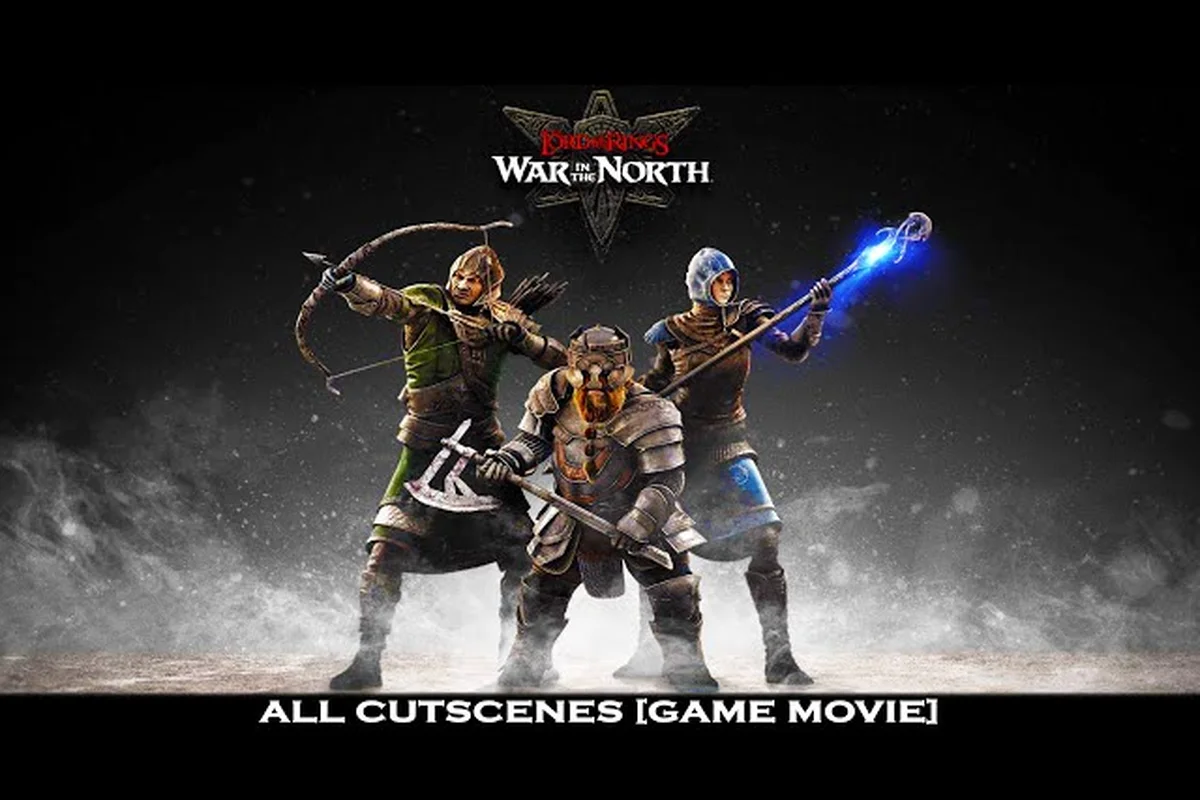
The Lord of the Rings: War in the North - Legacy Edition tells a story that runs parallel to the main events of the War of the Ring, and understanding that War in the North lore is essential for appreciating what makes this campaign unique. While Frodo and the Fellowship march toward Mordor, a separate conflict unfolds in the northern lands of Eriador, where three unlikely heroes must stop a dark force that threatens to overwhelm the Free Peoples from an unexpected direction. This article breaks down the complete War in the North story explained across its five chapters, examines the game's place in Tolkien's legendarium, and digs into the backstory of its primary antagonist, Agandaûr, whose Black Númenórean heritage ties him to one of Middle-earth's oldest and most tragic bloodlines.
The Historical Context Behind the Northern War
| Location | Canon Source | In-Game Role |
|---|---|---|
| Fornost | Canonical (Arnor capital) | Early-game battleground for the trio's first major engagement |
| Carn Dûm | Canonical (Witch-king's Angmar capital) | Final confrontation site against Agandaûr |
| Mount Gundabad | Canonical (Dwarven origin site) | Mid-game stronghold of orc and goblin forces |
| Ettenmoors | Canonical (Troll-fells) | Wilderness traversal zone linking major story beats |
| Sarn Ford | Canonical (Brandywine crossing) | Border checkpoint referenced in the northern war narrative |
| Barrow-downs | Canonical (Tyrn Gorthad) | Chapter location visited en route to Rivendell |
| Nordinbad | Original creation | Original settlement serving as a hub for northern resistance |
The War in the North lore is built on a foundation that Tolkien himself only sketched in the appendices of The Return of the King. The game draws its premise from a line Gandalf speaks about the northern front, where the forces of Sauron were held at bay by the valor of the Dúnedain and the Elves of Rivendell. According to the game's design documents and the Wikipedia entry on the game's plot, the story is inspired by Appendix A Part III, which covers the history of Durin's Folk and the battles fought in the North during the Third Age.
The timeline places the game's events in March of TA 3019, the same period when the Fellowship is making its way south. This means the northern campaign happens concurrently with the Battle of the Hornburg and the later march on Mordor, though the heroes of the North never learn of these events until much later. The game's narrative team deliberately chose this framing to create a sense of urgency while keeping the story self-contained, because the northern front operates in near-total isolation from the main theater of war.
The key historical events that set up the conflict include the slow corruption of the Black Númenórean Agandaûr, whose centuries-long service to Sauron transformed him from a mortal lord of the South into the Witch-king’s most trusted lieutenant. Agandaûr’s backstory is rooted in the Second Age, when his ancestors swore fealty to the Dark Lord during the forging of the Rings of Power, and his subsequent rise to power in the North directly mirrors the fall of Arnor. This backstory explains why Agandaûr, as a Black Númenórean, commands such fanatical loyalty from the orc legions and wargs that besiege the Free Peoples, and why his personal vendetta against the Grey Company and the Rangers of the North drives the plot forward from the very first siege of Sarn Ford.
-
The fall of Fornost in TA 1975, when the Witch-king of Angmar destroyed the capital of Arnor and scattered the Dúnedain of the North.
-
The founding of Rivendell as a refuge and stronghold, which became the primary obstacle to Angmar's expansion westward.
-
The rise of Agandaûr as a lieutenant of Sauron, tasked with reigniting the northern threat that had lain dormant since the Witch-king's defeat.
-
The weakening of the Grey Havens and the gradual departure of the Elves, which left the North more vulnerable than it had been in centuries.
This historical framework matters because it explains why the events of the game are plausible within Tolkien's world. The North was not simply a quiet backwater; it was a region that had been scarred by war for thousands of years, and the game's narrative taps into that deep well of established lore to create a story that feels authentic to the source material.
Agandaûr's Backstory and the Black Númenórean Legacy
The primary antagonist of War in the North lore is Agandaûr, a sorcerer who serves Sauron directly and commands the forces that threaten the North. To understand what makes him dangerous, you first need to understand the question of what is a Black Númenórean, because Agandaûr's entire identity and motivation flow from this heritage.
The Black Númenóreans were descendants of the Númenórean colonists who settled in Middle-earth during the Second Age, specifically those who remained loyal to Sauron after the Downfall of Númenor. Unlike the faithful Dúnedain who became the Rangers of the North, the Black Númenóreans embraced the darkness and served the Dark Lord willingly. According to community reports and the game's internal lore documents, Agandaûr is presented as one of the last surviving Black Númenóreans of note, a figure who has lived for thousands of years through the power of Sauron's sorcery.
What makes Agandaûr's backstory particularly compelling is the way the game connects him to the broader history of Angmar. The Witch-king established his kingdom in TA 1300, and the Black Númenóreans were among his chief lieutenants. When the Witch-king fell at the Battle of Fornost, many of his servants scattered, but Agandaûr apparently survived and went into hiding. The game's narrative suggests that he spent centuries in the shadows, rebuilding his power and waiting for the moment when Sauron would return and the North would be ripe for conquest.
The game presents Agandaûr's character through several distinct traits: his cold, calculating ruthlessness as a Black Númenórean commander, his obsessive pursuit of the lost Elven blade, and his tactical brilliance in commanding the northern legions of Sauron. Unlike the brutish Orc chieftains, Agandaûr relies on dark sorcery and strategic manipulation, orchestrating the siege of Fornost while personally hunting the Grey Company's heirs. This layered characterization—part sorcerer, part warlord, part zealot—drives the War in the North plot forward, as his dual obsession with both conquest and revenge against the Dúnedain shapes every major confrontation the player faces across the campaign.
-
His mastery of dark sorcery, which allows him to command the dead and corrupt the living.
-
His strategic patience, which stands in contrast to the more impulsive orc chieftains who serve him.
-
His personal vendetta against the Dúnedain, whom he blames for the fall of his people.
-
His willingness to use the Great Eagles as pawns, which sets up the game's most dramatic narrative twist.
For a full breakdown of Agandaûr’s origins, his command over the Dúnedain splinter faction, and the narrative weight he carries as Sauron’s lieutenant, see the Agandaûr lore deep dive. That guide traces how his actions in the game—such as orchestrating the siege of Nordinbad and wielding the corrupted blade Angrist—mirror the historical fall of the Black Númenóreans, directly connecting the game’s plot to the broader Second Age conflicts that shaped Middle-earth’s Third Age.
The Three Heroes and Their Connection to the Story
| Source Material | Canon Basis | Adaptation Notes |
|---|---|---|
| Return of the King (novel) | Gandalf's line about "few heroes in the North" | Primary narrative inspiration for the entire game's premise |
| Appendix A Part III (Durin's Folk) | Dwarven history and lineage of Durin's Folk | Grounds Farin's backstory and the Mount Gundabad campaign |
| The Fellowship of the Ring (novel) | Timeline set days before Frodo reaches Bree | Anchors the story's parallel placement within the War of the Ring |
| The Lord of the Rings film trilogy | Visual and tonal reference for characters and settings | First game based on both the novels and the film trilogy |
| Middle-earth Enterprises mandate | Heroes remain decent and kind | Resulted in a dialogue system with no moral branching |
| Platform | Metacritic Score | Notable Criticism |
|---|---|---|
| PC | 66/100 | Repetitive combat; praised graphics and tone |
| PlayStation 3 | 63/100 | Game-breaking bugs reported |
| Xbox 360 | 61/100 | Combat repetition flagged as primary flaw |
| Legacy Edition (all platforms) | N/A (rerelease) | Bundles all original deluxe and pre-order DLC with a QOL patch |
The War in the North story explained through its three protagonists reveals how the game uses character to drive its lore forward. Each hero represents a different facet of the Free Peoples' resistance, and their personal stories intertwine with the larger conflict in meaningful ways.
Eradan is a Ranger of the North, a descendant of the Dúnedain who have guarded the region since the fall of Arnor. His connection to the lore runs deep because the Rangers are the direct heirs of the Númenórean kings, and their entire existence is defined by the duty to protect lands that were once their kingdom. Eradan's arc in the game is about embracing that legacy fully, moving from a solitary hunter to a leader who understands that the North cannot be saved by one person alone.
Andriel is an Elf of Rivendell, and her presence in the party represents the fading power of the Elves in Middle-earth. Her personal story involves a tragic loss that occurred during an earlier confrontation with Agandaûr, which gives her a personal stake in the conflict beyond simple duty. The game uses Andriel to explore themes of loss and renewal, and her arc culminates in a choice that reflects the Elves' broader decision to leave Middle-earth or remain.
Farin is a Dwarf of the Lonely Mountain, and his connection to the lore comes through the history of Durin's Folk. The game draws on the appendix material about the Dwarves of the North, and Farin's story involves reclaiming honor for his people after a past failure. His arc touches on the Dwarven themes of pride, redemption, and the weight of ancestral memory.
The way these three characters interact with the world around them reveals the game's approach to lore: rather than relying on lengthy codex entries, War in the North embeds its War in the North story explained through environmental storytelling and direct confrontation. Eradan, Farin, and Andriel each carry unique dialogue trees that react to specific locations—such as Farin’s dwarven commentary on the ruined halls of Fornost or Andriel’s elven observations on the corruption spreading from Agandaûr’s fortress—forcing players to revisit areas to unlock the full War in the North plot summary. This design choice ties character backstory to gameplay progression, ensuring that the War in the North Agandaûr backstory is revealed not through passive reading but through the trio’s reactive banter and combat callouts, which deepen the player’s understanding of the Black Númenórean threat without ever pausing the action.
-
The heroes encounter named characters from the books, including Aragorn, Elrond, and the sons of Elrond, Elladan and Elrohir.
-
The game weaves their personal quests into the main narrative, so that character development and plot progression are inseparable.
-
The dialogue system allows for different responses, though the game's developers noted that Middle-earth Enterprises required the heroes to remain fundamentally decent, so there is no moral branching.
For a deeper look at how each hero's skills and abilities reflect their lore, the character comparison guide breaks down how their backgrounds inform their combat roles—for instance, Andriel's frost-based spells and healing arts stem directly from her Elven heritage and time spent in Rivendell, while Eradan's dual-wielding rogue tactics mirror his Ranger training in the wilds, and Farin's heavy armor and axe mastery tie back to his Dwarven smithing roots from the Grey Mountains, showing how the War in the North story explained through gameplay mechanics reinforces the narrative of each hero's connection to the looming threat of Agandaûr and his Black Númenórean forces.
The Five Chapters and Key Plot Beats
The War in the North plot summary follows a five-chapter structure that takes the heroes from the outskirts of Bree to the heart of Angmar's ancient capital. Each chapter introduces new locations, enemies, and lore revelations that build toward the final confrontation.
Chapter One: The Road to Rivendell
The game opens in the village of Sarn Ford, where the heroes defend the crossing against an orc assault. This introductory chapter establishes the immediate threat and introduces the player to the game's core mechanics. The narrative quickly moves to Bree, where the party meets Aragorn at the Prancing Pony, and the game's connection to the main story becomes clear. The chapter ends with the heroes escorting a wounded ally to Rivendell, setting up the larger conflict.
Chapter Two: The Fall of Fornost
The second chapter takes the party to the ruins of Fornost, the ancient capital of Arnor. This location is steeped in War in the North lore because it was the site of the Witch-king's greatest victory and eventual defeat. The heroes must navigate the ruins while uncovering evidence of Agandaûr's plans, and the chapter ends with a dramatic confrontation that reveals the sorcerer's connection to the Great Eagles.
Chapter Three: The Ettenmoors and Mount Gundabad
The third chapter moves the action to the Ettenmoors, a region that has been a battleground since the First Age. The heroes must push through orc-held territory to reach Mount Gundabad, which the game presents as a major stronghold of the enemy. The Gundabad lore guide explores this location in detail, including how the game expands on the mountain's history from the appendices.
Chapter Four: Nordinbad and the Dragon's Lair
The fourth chapter introduces Nordinbad, an original location created for the game. This Dwarven city has been overrun by the enemy, and the heroes must fight through it to reach the dragon that Agandaûr has corrupted. The chapter culminates in a boss fight against the dragon, which serves as a major set piece and narrative turning point.
Chapter Five: The Assault on Carn Dûm
The final chapter takes the heroes to Carn Dûm, the capital of Angmar and the seat of the Witch-king's power. The game presents this as the ultimate test, with the heroes fighting through the fortress to reach Agandaûr himself. The confrontation with the sorcerer is the climax of the War in the North story explained, and the game offers multiple endings depending on choices made earlier in the campaign.
The Game's Place in Tolkien Canon
One of the most common questions about War in the North lore is whether the game's story is considered canon within Tolkien's legendarium. The answer is nuanced, because the game occupies a unique position as an officially licensed adaptation that expands on material Tolkien never fully developed.
The game's developers worked with Middle-earth Enterprises to ensure that the story fit within the established timeline, and the game draws heavily on the appendices for its historical framework. However, the game also creates original characters and locations, including Nordinbad and the character of Agandaûr himself, which means it cannot be considered strictly canonical in the same way as Tolkien's own writings.
The books vs game comparison examines this relationship in detail, but the key points are: the game compresses Tolkien's timeline by placing Agandaûr's assault on Fornost during the Third Age's final centuries, whereas the books never mention a Black Númenórean warlord of that name. This divergence stems from the game's need for a tangible antagonist; Agandaûr's backstory as a sorcerer-king who survived the Downfall of Númenor and allied with Sauron's remnants gives the War in the North plot summary a villain whose motives are explained through lore tablets and dialogue, a narrative device the source material simply lacks.
-
The game respects the established timeline and does not contradict major events from the books.
-
The game fills in gaps that Tolkien left open, particularly regarding the northern front during the War of the Ring.
-
The game creates new material that is consistent with the tone and themes of the source material.
-
The game uses named characters sparingly, ensuring that cameos from Aragorn, Elrond, and others feel earned rather than gratuitous.
According to the IGN coverage of the Legacy Edition, the game expands Tolkien's legendarium by telling the untold story of the North during the War of the Ring, featuring cameos from major characters and locations including Rivendell, Lórien, and Mirkwood.
Thematic Analysis and Narrative Significance
Beyond the surface-level plot, the War in the North lore carries thematic weight that connects to the broader themes of Tolkien's work. The game explores ideas of sacrifice, legacy, and the cost of resistance, and these themes are woven through every chapter of the campaign.
The most prominent theme is the importance of seemingly small actions. The game's heroes are not the Ring-bearer or the great captains of the West; they are ordinary fighters who happen to be in the right place at the right time. The narrative emphasizes that their efforts matter even though they will never be celebrated in song, and this reflects Tolkien's belief that even the smallest person can change the course of the future.
Another significant theme is the burden of history. Each of the three heroes carries the weight of their people's past, and the game explores how that history shapes their choices. Eradan must live up to the legacy of the Dúnedain, Andriel must come to terms with the fading of her people, and Farin must reconcile with the failures of his ancestors. The game suggests that the past is not something to escape but something to understand and ultimately transcend.
The game also engages with the nature of evil. Agandaûr is not a one-dimensional villain; the game presents him as a figure who was once noble and chose darkness willingly. His backstory as a Black Númenórean connects him to the tragic history of Númenor, and the game uses him to explore how pride and fear can corrupt even the most powerful beings.
The narrative significance of the game extends to its ending, which offers different outcomes based on player choices. The choice regarding the Great Eagle Beleram is particularly meaningful, because it forces the player to weigh the value of a single life against the needs of the larger mission. This moral complexity is rare in action games, and it elevates the War in the North story explained beyond simple good-versus-evil storytelling.
Frequently Asked Questions
What is the War in the North lore about?
The War in the North lore tells the story of a parallel conflict during the War of the Ring, where three heroes must stop the sorcerer Agandaûr from conquering the northern lands of Eriador. The narrative runs concurrently with the main events of The Lord of the Rings and draws heavily on Tolkien's appendices.
Who is Agandaûr in War in the North?
Agandaûr is a Black Númenórean sorcerer who serves Sauron and commands the forces threatening the North. His backstory connects him to the ancient history of Númenor and the Witch-king of Angmar, and he is the primary antagonist of the game's campaign.
What is a Black Númenórean in the game's lore?
A Black Númenórean is a descendant of the Númenórean colonists who sided with Sauron after the Downfall of Númenor. In War in the North lore, Agandaûr represents the last of these ancient servants of darkness, having survived for thousands of years through sorcery.
Is War in the North considered canon in Tolkien's legendarium?
The game is officially licensed and respects the established timeline, but it creates original characters and locations that are not part of Tolkien's writings. It is best understood as an authorized expansion that fills gaps in the narrative while remaining consistent with the source material.
How does the game connect to the main Lord of the Rings story?
The game runs parallel to the main story, set days before Frodo reaches Bree. The heroes meet Aragorn at the Prancing Pony and interact with characters like Elrond and the sons of Elrond, while the northern campaign unfolds independently of the Fellowship's journey.