
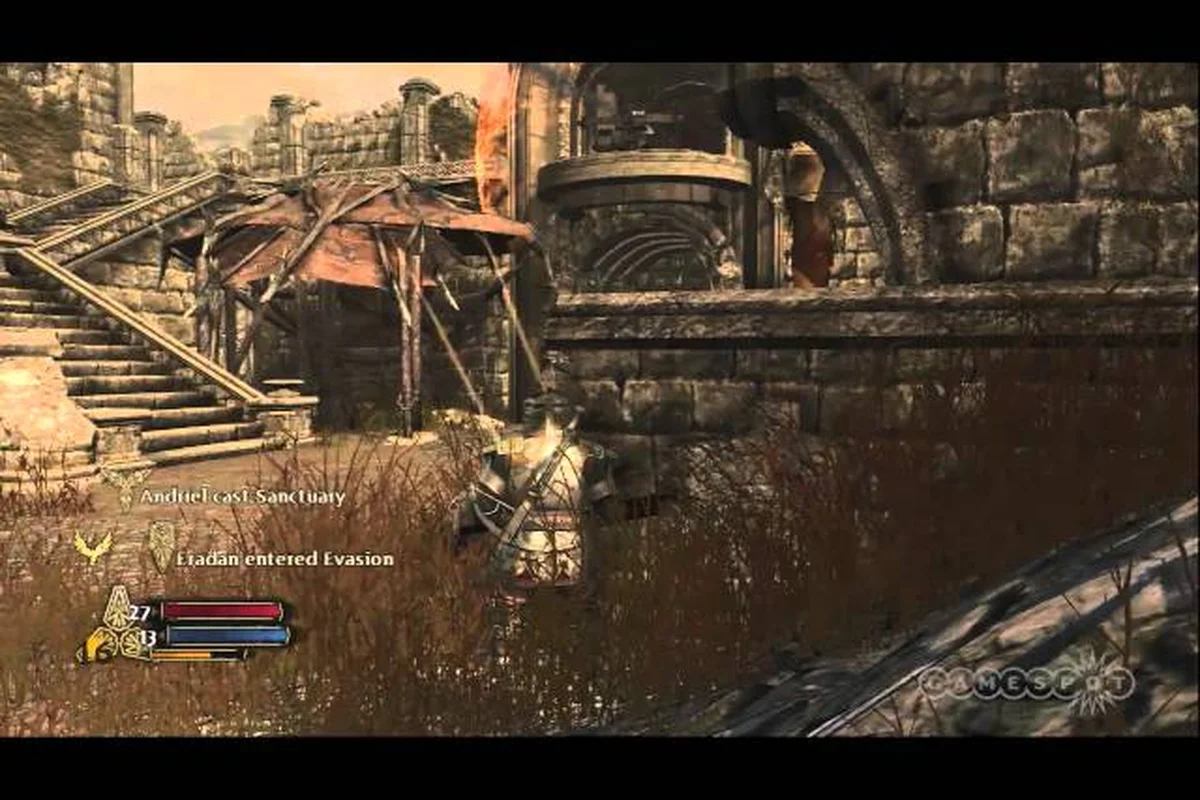
Fornost Erain casts one of the longest shadows in Middle-earth's northern history, and the War in the North Fornost lore gives that fallen city a second life on the battlefield. The game pulls directly from Tolkien's appendices, where Gandalf hints that a few heroes in the North held back Sauron's forces during the War of the Ring. Understanding what happened at Fornost centuries earlier explains why the Dúnedain rangers still fight, why Angmar's legacy refuses to die, and why the Black Númenórean Agandaûr chose those ruins as his staging ground. This article walks through the city's rise and fall, the Witch-king's campaign against Arnor, and how the game's trio of heroes fits into that larger conflict. and why the Black Númenórean Agandaûr chose those ruins as his staging ground, a decision that becomes far more sinister once you trace his centuries-long manipulation of the northern kingdoms in our War In The North Agandaur Explained breakdown. This article walks through the city's rise and fall, the Witch-king's campaign against Arnor, and how the game's trio of heroes fits into that larger conflict.
The Fall of Fornost and the Rise of Angmar
Fornost Erain's Fall: The Witch-king's Campaign of TA 1409–1975
The game's Fornost ruins reflect a specific canon timeline: Angmar's forces first shattered Arnor's successor kingdom of Rhudaur in TA 1409, but the decisive siege of Fornost Erain came in TA 1975. The Witch-king's victory ended the line of Arthedain kings and scattered the Dúnedain into the Rangers. In-game, Agandaûr's orc army occupies these same ruins, mirroring the historical Angmarim occupation. This is why the trio's mission at Fornost isn't a fresh battle—it's a reclamation of a fortress that has already fallen once, making their distraction of Agandaûr's forces a strategic echo of the original siege.
Elladan and Elrohir's Fornost Assistance: A Canon Divergence
The twin sons of Elrond appear at Fornost to aid the trio, a scene with no direct novel counterpart—in canon, the twins operate in the North but never fight at Fornost's ruins during the War of the Ring. Their presence serves a mechanical purpose: they provide a temporary two-hero assist during the Agandaûr confrontation, effectively giving players a four-person party for the first boss fight. This is the only mission where the game exceeds its three-character combat cap, and it explains why the Agandaûr encounter at Fornost feels easier than his later Carn Dûm rematch, where the twins are absent.
| Canon Location | In-Game Role | Canon Status in War of the Ring | Gameplay Function |
|---|---|---|---|
| Fornost Erain | Ruins where the trio distracts Agandaûr's orc army | Fallen to the Witch-king centuries prior | Main quest hub; Beleram rescue site |
| Carn Dûm | Witch-king's Angmar capital | Active stronghold of Angmar | Endgame dungeon; final confrontation zone |
| Mount Gundabad | Rallying point for northern orc forces | Orc stronghold in the Misty Mountains | Late-game combat area |
| Sarn Ford | Border crossing on the Brandywine | Guarded by Dúnedain rangers | Early-game traversal point |
| Barrow-downs | Ancient burial mounds east of the Old Forest | Haunted by wights | Mid-game exploration zone |
| Nordinbad | Original location (not in Tolkien canon) | N/A — created for the game | Hub for dwarf-related quests |
The War in the North Angmar lore begins with a kingdom divided. After the death of the tenth king of Arnor, the realm split into three successor states: Arthedain, Rhudaur, and Cardolan. This fragmentation made the northern Dúnedain vulnerable, and the Witch-king exploited that weakness by establishing Angmar in the far northeast around the year 1300 of the Third Age. His capital at Carn Dûm became the seat of a kingdom built entirely on malice, and his forces pressed steadily against the remnants of Arnor for over five centuries.
Fornost Erain, whose name means "northern fortress of the kings," served as the capital of Arthedain and the last great stronghold of the northern Dúnedain. The city sat at the southern end of the North Downs, guarding the approaches to the Weather Hills and the lands beyond. When the Witch-king finally marched in force, Fornost became the site of the decisive battle that ended Arnor as a political entity.
The sequence of events that led to the city's fall reads like a tragedy in three acts, each driven by Sauron's deliberate strategy to bleed the Dúnedain of the North. First came the slow strangulation of Fornost's supply lines by Angmar's hill-trolls and orc raiders, cutting off reinforcements from the surviving Dúnedain settlements. Then the plague of T.A. 1636 struck, halving the city's garrison and leaving its walls undermanned. Finally, in T.A. 1974, the Witch-king unleashed his full host, overwhelming the weakened defenders before King Arvedui could muster a relief force—a cascade of attrition, disease, and overwhelming force that no single battle could have prevented.
-
Rhudaur falls first — the Witch-king installs puppet chieftains and corrupts the hillmen, turning a former ally kingdom into Angmar's vanguard.
-
Cardolan is overwhelmed — the Great Plague devastates its population, and the Witch-king's forces sweep through the Barrow-downs, leaving the dead to rise as wights.
-
Arthedain makes its final stand — King Arvedui holds Fornost against the siege, but the Witch-king's army, reinforced by orcs and evil men, breaks the defenses in TA 1974.
The battle ended with the king fleeing north to the icy shores of the Forochel, where he drowned after refusing the aid of the Lossoth. The Witch-king then claimed Fornost as his own, and the city's name became a byword for Dúnedain defeat.
Who Are the Dúnedain in War in the North
The War in the North who are the Dúnedain question gets a direct answer through the game's protagonist, Eradan. He belongs to the Rangers of the North, the scattered descendants of the Númenórean exiles who once ruled Arnor. After Fornost fell, the line of kings broke, and the surviving Dúnedain became a wandering people who protected the lands of Eriador in secret. They took no titles and built no cities, but they kept the ancient bloodline alive through generations of quiet vigilance.
The game's take on the Dúnedain draws heavily from Tolkien's Appendix A, which describes how the northern rangers "hunted the evil of Angmar" long after their kingdom vanished. Eradan embodies that tradition, and his partnership with the elf Andriel and the dwarf Farin reflects the broader alliance that the northern war required.
| Dúnedain Character | Role in the Northern War | Canon Status |
|---|---|---|
| Eradan | Ranger of the North, protagonist, leads the assault on Fornost | Original game character |
| Aragorn | Chieftain of the Dúnedain, appears at the Prancing Pony in Bree | Canon character from the novels |
| Halbarad | Ranger of the North, aids the party in later missions | Canon character from the novels |
| Elladan and Elrohir | Sons of Elrond, join the fight at Fornost | Canon characters from the novels |
The War in the North Eradan lore ties directly to the Dúnedain's long war against Angmar's remnants. Eradan is not a king or a lord; he is a ranger who carries the burden of a fallen realm. That distinction matters because the game's narrative repeatedly emphasizes that the North's defense depends on people like him, not on restored thrones or ancient alliances.
Sauron's Northern Forces and the Resurgence of Angmar
The War in the North Sauron northern forces storyline explains why the game's conflict matters beyond the events seen in the films. While the Fellowship marched south toward Mordor, Sauron dispatched agents to the North to crush any remaining resistance and secure the region's resources. The game's antagonist, Agandaûr, serves as that agent, a Black Númenórean who resurrects the Witch-king's old strategy of using Fornost as a military anchor.
Agandaûr's plan mirrors the original Angmar playbook almost exactly. He rallies orc tribes at the ruins of Fornost, summons fell creatures from the mountains, and attempts to create a northern front that would split the Free Peoples' attention. The game's narrative makes clear that this is not a random orc invasion; it is a coordinated campaign with strategic objectives.
The forces arrayed against the trio include several distinct threats: the revived Witch-king's Angmarim sorcerers, who channel fell lightning and frost from the ruins of Fornost's royal citadel; packs of warg-riders prowling the North Downs' roads to cut off any retreat to Trestlebridge; and the hulking stone-giant golems that the Enemy has reanimated from the very flagstones of the fallen city. Each threat exploits a different weakness in the Dúnedain's dwindling numbers, forcing Eradan, Farin, and Andriel to prioritize targets rather than fight a pitched battle.
-
Orc legions under Agandaûr's direct command, organized into siege formations around Fornost.
-
Fell-beasts and Great Eagles locked in aerial combat, with the eagle Beleram serving as a key ally.
-
The Black Númenórean's lieutenants, including the sorcerer Tharzog and the troll Raguk, each holding a piece of the northern war machine.
-
Wargs and mountain beasts used as shock troops in the Ettenmoors and the foothills of Gundabad.
What makes the northern campaign distinct from the southern war is its reliance on Carn Dûm as a symbolic and strategic center. The Witch-king's old capital still radiates power, and Agandaûr uses that legacy to legitimize his command. Players who explore the game's locations will notice that every major battle site, from Fornost to Gundabad, connects to the old Angmar network of fortresses and supply lines.
Fornost in the Game: Missions, Characters, and Canon Connections
The game's treatment of Fornost goes beyond a simple battlefield set-piece. The War in the North Fornost lore is woven into multiple missions, each revealing a different layer of the city's history and its current strategic value. The party first arrives at Fornost to distract Agandaûr's orc army while the Eagles and the Dúnedain maneuver elsewhere, and the mission structure reflects that dual purpose.
| Mission Focus | Location Detail | Lore Connection |
|---|---|---|
| Rescue Beleram | The Eagle's nest within Fornost's ruins | Ties to Gwaihir and the Great Eagles' role in the North |
| First Confrontation with Agandaûr | The central courtyard and collapsed towers | Agandaûr escapes on a fell-beast, mirroring the Witch-king's tactics |
| Elladan and Elrohir's Aid | The eastern ramparts | The twins' presence links the game to Rivendell's broader strategy |
| The Road to Carn Dûm | The pass north of Fornost | Sets up the final assault on Angmar's capital |
The game also uses Fornost to establish the stakes of the northern war. When the party meets Aragorn at the Prancing Pony in Bree, he frames the mission in terms of the old Dúnedain struggle. The city's ruins are not just a battleground; they are a monument to what the North lost and what it still fights to protect.
Players who dig into the game's collectibles and environmental storytelling will find additional layers. The War in the North Fornost collectibles scattered through the ruins include fragments of old Arnor's heraldry, letters from the siege of TA 1974, and references to the Witch-king's occupation. These details reward players who take the time to explore, and they reinforce the sense that Fornost is a place with centuries of memory buried beneath its broken stones.
How the Game Expands Tolkien's Legendarium
Beleram's Rescue: The Great Eagle Combat Mechanic
When the party reaches Fornost's inner courtyard, they find Beleram—one of only two Great Eagles in the game, alongside Gwaihir—trapped and wounded. The rescue sequence functions as a mandatory boss-adjacent encounter: players must clear waves of Agandaûr's orc archers while the eagle's health bar depletes, creating a timed defense objective. Success grants Beleram as a permanent ally who provides aerial strike support in subsequent zones, including the Ettenmoors. This mechanic distinguishes Fornost from Carn Dûm's pure combat gauntlet, introducing a protect-and-reward loop that the game never repeats elsewhere.
Agandaûr's Fell-beast Escape: The Fornost Boss Sequence
The first Agandaûr confrontation at Fornost ends not in victory but in scripted escape—the Black Númenórean summons a fell-beast and flees, leaving the party to fight his orc reinforcements. This design choice establishes Agandaûr's threat level while preserving him for the Carn Dûm finale. The escape trigger occurs at 50% boss HP, a hard scripted threshold that cannot be skipped with burst damage. Players who save their Elven Rage or hero abilities for the second phase will waste them, as the fight transitions to a wave-clear phase immediately after the cutscene. This makes Fornost a tutorial for boss-phasing mechanics that Gundabad's later fights use more aggressively.
The game's developers drew directly from Gandalf's line in The Return of the King about "a few heroes in the North" holding back the tide, and they built an entire narrative around that single sentence. According to the game's production notes, Middle-earth Enterprises enforced that the heroes remain decent and kind, which is why the dialogue system avoids moral branching. The result is a story that stays firmly within the heroic tradition of the novels while filling in a gap that Tolkien left deliberately vague.
The War in the North Angmar lore benefits from this expansion because it gives concrete form to events that the books only summarize. The fall of Fornost, the Witch-king's rise, and the Dúnedain's long exile are all mentioned in the appendices, but the game turns those historical notes into playable experiences. This approach has drawn praise from players who appreciate the deep-cut references, though some critics note that the game takes liberties with timeline details.
The expansion introduces original elements that fit alongside canon material, most notably the playable Dúnedain rangers Eradan, Farin, and Andriel, whose personal arcs—particularly Eradan's quest to reclaim his northern heritage—interweave with the established lore of the Dúnedain of the North as guardians of Arnor. Rather than contradicting Tolkien's timeline, these characters operate within the gaps of the narrative, allowing the game to dramatize the desperate defense of Fornost against the Witch-king's forces while preserving the canonical outcome of the city's fall and the Dúnedain's eventual retreat to Rivendell.
-
Nordinbad serves as an original dwarf settlement, filling a gap in the map between the Blue Mountains and Gundabad.
-
Beleram is an original Great Eagle character, though he connects to the established eagle lore through Gwaihir.
-
Agandaûr is an original villain, but his Black Númenórean heritage ties him to a canon-adjacent tradition of corrupted men serving Sauron.
These additions work because they respect the established framework. The game never contradicts the novels' major events; it simply adds detail around the edges. Players who want a deeper understanding of the northern theater will find that the game's version of events aligns with the appendices while offering new perspectives on familiar conflicts.
Frequently Asked Questions
What happened at Fornost in the lore?
Fornost Erain was the capital of Arthedain, the last surviving successor kingdom of Arnor. In TA 1974, the Witch-king of Angmar besieged and captured the city, forcing King Arvedui to flee north. The fall of Fornost effectively ended the northern Dúnedain kingdom and began the long exile of the Rangers.
Who are the Dúnedain in War in the North?
The Dúnedain are the descendants of the Númenórean exiles who founded Arnor and Gondor. In the game, they appear as the Rangers of the North, including Eradan, Aragorn, and Halbarad. They protect Eriador in secret after the fall of their kingdom, carrying on the fight against Angmar's remnants.
Why does Agandaûr choose Fornost as his base?
Agandaûr uses Fornost because it holds strategic and symbolic value. The ruins sit at the crossroads of the northern war routes, and the site's history as the Witch-king's conquest gives his campaign legitimacy. By rallying orcs there, he recreates the old Angmar threat and forces the Free Peoples to respond.
How does the game connect to Tolkien's original writings?
The game is inspired by Gandalf's line in The Return of the King about heroes in the North, and it draws from Appendix A of The Lord of the Rings. Locations like Fornost, Carn Dûm, and Mount Gundabad come from canon, while characters like Beleram and Agandaûr are original creations.
Is the War in the North Fornost lore accurate to the books?
The game is broadly accurate but takes liberties. It faithfully depicts Fornost's fall and the Witch-king's role, yet compresses the timeline and invents Agandaûr to rally orcs there. This creative expansion, inspired by Gandalf's line about northern heroes, doesn't contradict major canon, so players will recognize the framework.