
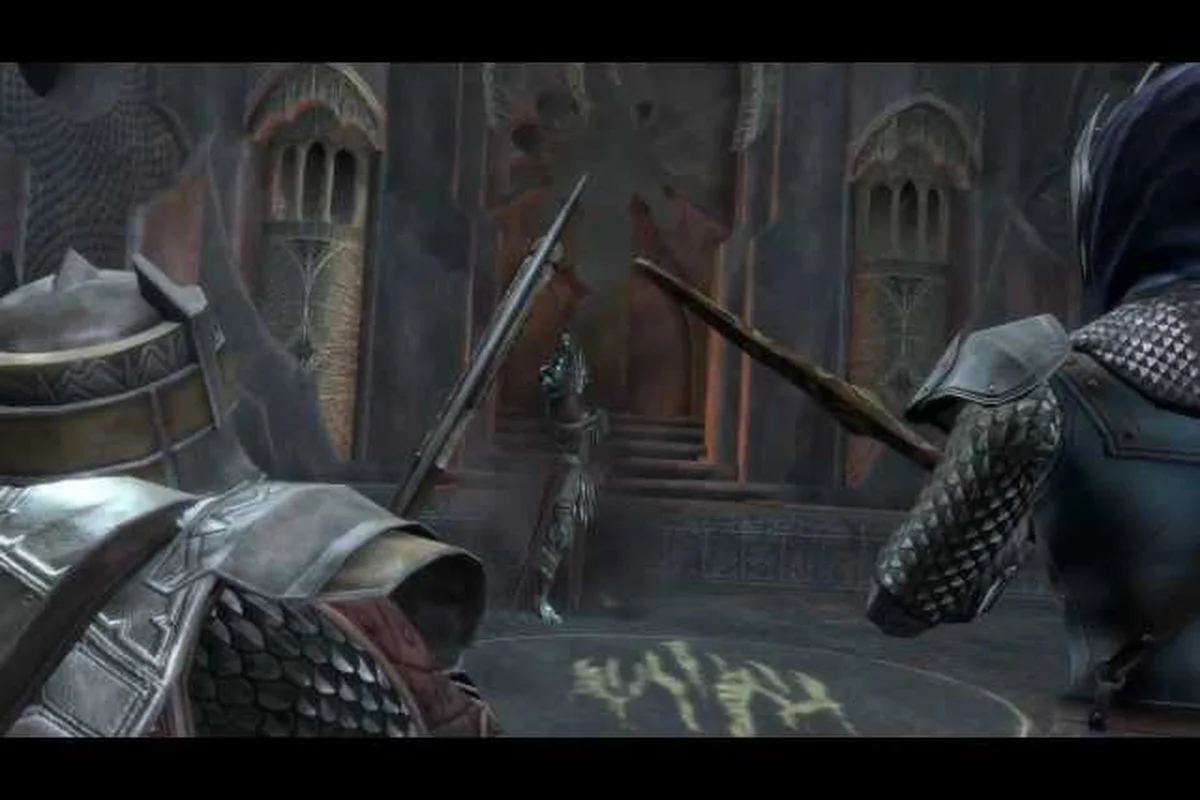
War in the North Agandaûr explained starts with a simple truth: he is the main antagonist of the 2011 action RPG, and understanding his role unlocks the entire northern theater of the War of the Ring. While Frodo and Sam carried the One Ring toward Mordor, Agandaûr orchestrated a devastating campaign across Eriador, operating from the ruins of Carn Dûm with a force large enough to threaten Rivendell itself. This article breaks down his origins as a Black Númenórean, his military strategy, his failed dragon pact with Úrgost, and how his defeat connects to the broader timeline of Tolkien's legendarium. ce large enough to threaten Rivendell itself. This article breaks down his origins as a Black Númenórean, his military strategy, his failed dragon pact with Úrgost, and how his defeat connects to the broader timeline of Tolkien's legendarium, a defeat that ultimately paved the way for the events detailed in our War In The North Lore guide.
Agandaûr's Origin and Role in the Northern War
Agandaûr belongs to the Black Númenóreans, a faction of Númenórean descent whose ancestors sided with Sauron during the Downfall of Númenor in the Second Age. Unlike the Dúnedain of the North who remained faithful, these exiles embraced the worship of Morgoth and served the Dark Lord across generations. By the time of the War of the Ring, Agandaûr had risen to a position of command under the Witch-king of Angmar, acting as his field commander in the northern territories while the Witch-king focused on the siege of Minas Tirith.
His mission was straightforward: lay waste to the North so that no aid could reach Gondor from Rivendell or the remnants of Arnor. According to the game's narrative, which draws on Gandalf's line in The Return of the King about "a few heroes in the North," Agandaûr rallied an immense army in the ruins of Fornost while Frodo and Samwise traveled toward Mount Doom. This parallel timing is crucial for understanding the War in the North Lord of the Rings timeline, because it means the fate of Middle-earth hinged on two simultaneous fronts.
The character is notable because he represents a rare on-screen example of a Black Númenórean commander actively leading forces during the Third Age. While Tolkien's writings mention Black Númenóreans in passing, the game expands their role by giving players a tangible antagonist to fight. According to community reports and the game's lore codex, Agandaûr's backstory includes his rise through Sauron's ranks, his assignment to the North, and his personal ambition to claim Carn Dûm as his own seat of power.
| Agandaûr Attribute | In-Game Detail | Lore Significance |
|---|---|---|
| Race | Black Númenórean | Descendants of Númenórean loyalists to Sauron |
| Commander | Witch-king of Angmar | Serves as superior officer in the northern theater |
| Base of Operations | Carn Dûm | Former capital of Angmar, reclaimed for Sauron |
| Primary Objective | Destroy northern resistance | Prevent aid from reaching Gondor |
| Fate | Dies calling on Sauron | Ring destroyed moments before his plea |
The Battle of Fornost and Carn Dûm Operations
The Battle of Fornost holds deep historical weight in Tolkien's lore, and the game reimagines it as a staging ground for Agandaûr's campaign. In the original timeline, Fornost was the capital of Arnor that fell to the Witch-king in 1974 of the Third Age, leading to the destruction of the northern kingdom. By the time of the War of the Ring, Fornost lay in ruins, but Agandaûr used its strategic position to marshal forces and coordinate attacks across Eriador.
Players first encounter Agandaûr's influence when they arrive at Sarn Ford and later push through the Ettenmoors, where his forces clash with the Eagles. The game's narrative structure means that every major battle in the North traces back to his command decisions, from the ambushes on the road to Rivendell to the final siege of Carn Dûm itself. Understanding this chain of command helps players appreciate why the War in the North northern war mattered so much to the overall outcome of the War of the Ring.
His operations followed a clear pattern that mirrors Sauron's broader strategy in the South: distract the free peoples, divide their forces, and prevent them from concentrating strength. Agandaûr achieved this by launching simultaneous attacks on multiple fronts, forcing the Dúnedain Rangers, the Elves of Rivendell, and the Dwarves of the Blue Mountains to defend their own territories rather than coordinate a unified response. This tactical approach is documented in the game's lore entries and reinforced by the mission structure, where players must choose which threats to address first.
The Witch-king's Shadow Over the North
The Witch-king of Angmar appears early in the story as Agandaûr's superior, establishing the chain of command that links the northern campaign to the greater war. While the Witch-king departs for the South to lead the assault on Minas Tirith, he leaves Agandaûr with clear instructions: crush the North or die trying. This dynamic adds depth to Agandaûr's character because he operates in the shadow of a far more powerful master, yet still commands enough authority to make independent tactical decisions.
The game portrays Agandaûr as ambitious rather than merely obedient, which is why he pursues the dragon alliance so aggressively. He understands that defeating the North requires more than Orc legions, so he seeks to add a dragon's fire to his arsenal. This ambition ultimately becomes his undoing, as his negotiations with Úrgost reveal a fundamental miscalculation about what the dragon truly desires.
The Ruins of Fornost as a Military Base
Fornost's ruins serve as more than a backdrop; they function as Agandaûr's forward operating base for the northern campaign. The city's strategic location along the North-South Road allowed his forces to intercept travelers, raid supply lines, and project power across Eriador. Players who explore the area find evidence of his occupation, including war camps, siege engines, and captured prisoners awaiting interrogation.
According to the game's environmental storytelling, Agandaûr fortified Fornost with layers of defenses designed to slow any advance toward Carn Dûm. This defensive depth explains why the player party must fight through multiple zones before reaching his inner sanctum, and it reinforces the War in the North Middle-earth lore by showing how Sauron's forces adapted ancient ruins for modern warfare.
The Dragon Alliance with Úrgost
One of the most fascinating aspects of Agandaûr's character is his attempt to forge an alliance with Úrgost, an ancient dragon who once served the Witch-king of Angmar. The dragon had been bound to Carn Dûm's service in ages past, but by the time of the game's events, Úrgost had grown resentful of his servitude and sought to reclaim his freedom. Agandaûr's plan involved offering Nordinbad as a prize, hoping to entice the dragon into fighting for Sauron's cause in exchange for territorial dominion.
The negotiation fails spectacularly because Úrgost wants something far more valuable than Nordinbad: he wants Carn Dûm itself. This revelation creates a three-way conflict where the player party, Agandaûr's forces, and Úrgost all vie for control of the ancient fortress. The dragon's betrayal forces Agandaûr to fight on two fronts, weakening his position and creating opportunities for the heroes to exploit.
This subplot enriches the War in the North Tolkien lore by exploring how even Sauron's servants struggle with internal rivalries and competing ambitions. The dragon alliance storyline also demonstrates that the game's writers understood Tolkien's dragons as intelligent, prideful beings who cannot be simply commanded like Orcs or Trolls. Úrgost's demands reflect the dragon's nature: ancient, calculating, and utterly self-interested.
| Dragon Alliance Terms | Agandaûr's Offer | Úrgost's Demand |
|---|---|---|
| Primary Prize | Nordinbad | Carn Dûm |
| Service Required | Fight against the North | Freedom from servitude |
| Outcome | Rejected | Alliance collapses |
| Strategic Impact | Weakens Agandaûr | Creates three-way conflict |
Why the Dragon Pact Failed
The dragon pact failed because Agandaûr fundamentally misunderstood dragon psychology. He assumed that offering territory would appeal to Úrgost's desire for dominion, but dragons in Tolkien's world value freedom above all else. Úrgost had spent centuries bound to Carn Dûm's service, and his primary motivation was breaking that bond entirely, not trading one master for another.
Community analysis of the game's dialogue and lore entries suggests that Agandaûr's arrogance as a Black Númenórean blinded him to this reality. He viewed the dragon as a tool to be deployed, not a partner to be negotiated with, and this condescension sealed the alliance's fate. The failure also highlights a recurring theme in Tolkien's work: evil cannot sustain cooperation because its servants are ultimately self-serving.
Úrgost's Role in the Final Battle
When the player party reaches Carn Dûm for the final confrontation, Úrgost emerges as a pivotal figure in the battle's outcome. Depending on player choices and progression, the dragon can either fight alongside the heroes against Agandaûr's forces or become an additional boss encounter. This branching scenario rewards players who paid attention to the lore and made diplomatic choices earlier in the game.
The dragon's presence in the final battle serves as poetic justice for Agandaûr, who sought to weaponize a dragon and instead saw that weapon turn against him. According to player reports, the Úrgost encounter on Heroic difficulty requires precise positioning and coordination, especially when the dragon's fire breath forces the party to spread out while Agandaûr's sorcery targets clustered players.
Agandaûr's Death and the War of the Ring Timeline
Agandaûr's death scene carries enormous weight because of its timing within the War of the Ring timeline. As the player party defeats him in Carn Dûm, he calls out to Sauron for aid, but the Dark Lord cannot respond because the One Ring has just been destroyed in the fires of Mount Doom. This moment of cosmic irony underscores the interconnected nature of the war: the victory in the North and the victory in the South happen simultaneously, each enabling the other.
The game's narrative structure deliberately synchronizes these events, so players experience the fall of Agandaûr at the exact moment Frodo and Sam complete their quest. This parallel storytelling reinforces the War in the North Lord of the Rings timeline by showing that the northern campaign was not a sideshow but an integral front in the war. Had Agandaûr succeeded, Rivendell might have fallen, and the free peoples of the North would have been unable to aid Gondor.
His death also carries thematic significance within War in the North Tolkien lore because it demonstrates the limits of Sauron's power. Despite commanding vast armies and ancient sorcery, Agandaûr cannot survive without his master's support, and that support evaporates the moment the Ring is unmade. This dependency reflects the hierarchical nature of evil in Tolkien's world, where every servant ultimately depends on the Dark Lord's will.
| Timeline Event | Date (Third Age) | Connection to Agandaûr |
|---|---|---|
| Battle of Fornost | 1974 | Historical precedent for northern warfare |
| Witch-king departs South | 3018 | Agandaûr assumes full command |
| Frodo leaves Rivendell | December 3018 | Northern campaign intensifies |
| Battle of the Pelennor Fields | March 3019 | Agandaûr's final assault begins |
| Ring destroyed | March 25, 3019 | Agandaûr dies calling for aid |
The Black Númenórean Legacy
Agandaûr's death does not erase the legacy of the Black Númenóreans, who continue to serve Sauron's memory long after the War of the Ring. The game's ending suggests that some of his lieutenants escape Carn Dûm, carrying the taint of Númenor's corruption into the Fourth Age. This open thread connects to Tolkien's broader writings about the fate of Sauron's servants after the Dark Lord's defeat.
For players interested in the deeper War in the North story explained, Agandaûr represents a cautionary tale about ambition within evil's hierarchy. He sought to prove himself worthy of greater power by conquering the North, but his methods alienated potential allies and ultimately led to his downfall. The game's writers used his character to explore how even the most capable servants of darkness are undone by their own pride.
How Agandaûr Connects to the Greater Legendarium
Agandaûr's story connects to the greater legendarium through multiple threads, including the history of Angmar, the fate of the Dúnedain, and the strategic logic of Sauron's war planning. The game draws heavily on Appendix A of The Lord of the Rings, particularly the section on Durin's Folk, to ground its narrative in established lore. This attention to detail is why the game remains popular among Tolkien enthusiasts who appreciate faithful adaptations.
The character also serves as a bridge between the film trilogy and the novels, since the game was the first to draw on both sources simultaneously. According to the game's development history, Middle-earth Enterprises enforced that heroes remain decent and kind, which shaped the dialogue system and character interactions. This constraint explains why the game avoids moral ambiguity and instead focuses on clear-cut heroism against unambiguous evil.
Fighting Agandaûr: Boss Mechanics and Strategy
The final confrontation with Agandaûr in Carn Dûm is one of the most demanding boss fights in the game, requiring mastery of all three hero classes and precise coordination in co-op play. The fight unfolds in multiple phases, each introducing new mechanics that test different aspects of player skill. Understanding these phases is essential for players attempting the encounter on Heroic or Legendary difficulty, where mistakes are brutally punished.
The first phase focuses on Agandaûr's sorcery, as he bombards the party with area-of-effect spells and summons undead minions to create chaos. Players must learn to recognize the telegraphed animations that precede each attack, since the damage output on higher difficulties can eliminate under-leveled characters in a single hit. Positioning becomes critical, as the arena features multiple elevation changes that can provide cover from certain attacks.
The second phase introduces melee combat when Agandaûr draws his blade and closes distance with the party. His sword attacks chain into combos that punish players who overcommit to their own offense, so the fight becomes a rhythm of dodging, counter-attacking, and managing stamina. The Black Númenórean sorcerer also gains new abilities at this stage, including a life-drain that heals him based on damage dealt to the party.
| Boss Phase | Primary Threat | Recommended Strategy |
|---|---|---|
| Phase 1: Sorcery | Area-of-effect spells | Spread out, interrupt casts |
| Phase 2: Melee | Sword combos, life-drain | Dodge, counter, manage stamina |
| Phase 3: Desperation | All abilities combined | Use co-op coordination, save ultimates |
Phase 3: Desperation Mode
The third and final phase triggers when Agandaûr's health drops below 25 percent, activating a desperation mode that combines all his previous abilities with increased frequency and damage. He begins teleporting around the arena, making it difficult for melee characters to maintain contact while ranged characters struggle to track his movements. This phase demands constant awareness and rapid adaptation, since the boss's attack patterns become less predictable.
According to community testing, the key to surviving Phase 3 is saving ultimate abilities for this moment rather than using them earlier in the fight. The burst damage from coordinated ultimates can shave off a significant portion of Agandaûr's remaining health, potentially skipping the most dangerous attack rotations. Players who waste their ultimates in Phase 1 or 2 often find themselves overwhelmed when the desperation mode begins.
Co-op Coordination Tips
Co-op play changes the dynamics of the Agandaûr fight significantly, since the boss's attacks can target multiple players simultaneously. The game's design encourages role specialization, with the Champion drawing aggro, the Ranger dealing sustained damage from range, and the Mage providing healing and crowd control. Clear communication about who is handling which mechanic prevents the chaos that often leads to party wipes.
The fight also rewards players who have invested in specific skill trees, particularly those that provide defensive cooldowns or emergency healing. According to player reports, having at least one character with a revive ability is nearly essential on higher difficulties, since the boss's desperation attacks can down multiple party members in quick succession. The encounter serves as a final test of everything players learned throughout the campaign, making it a satisfying conclusion to the northern war.
Frequently Asked Questions
Who is Agandaûr in War in the North?
Agandaûr is the main antagonist of The Lord of the Rings: War in the North - Legacy Edition, serving as a Black Númenórean commander under the Witch-king of Angmar. He operates from Carn Dûm and leads Sauron's forces in the northern theater, attempting to crush resistance across Eriador while the Ring travels south.
What is a Black Númenórean in Tolkien lore?
Black Númenóreans are descendants of Númenóreans who sided with Sauron during the Downfall of Númenor in the Second Age. They rejected the friendship of the Elves and the Valar, embracing darkness instead. Agandaûr represents this faction in the game, showing how their corruption persisted into the Third Age.
Why does Agandaûr try to ally with the dragon Úrgost?
Agandaûr seeks to strengthen his forces by adding a dragon's fire to his army, offering Nordinbad as a prize. However, Úrgost demands Carn Dûm instead, causing the alliance to collapse. The failed negotiation creates a three-way conflict that weakens Agandaûr's position and creates opportunities for the heroes.
How does Agandaûr's death connect to the Ring's destruction?
Agandaûr dies calling on Sauron for aid, but the Dark Lord cannot respond because the One Ring has just been destroyed in Mount Doom. This timing emphasizes the interconnected nature of the war, showing that the victory in the North and the victory in the South happen simultaneously.
What difficulty is recommended for the Agandaûr boss fight?
Normal difficulty is recommended for first-time players learning Agandaûr's melee, ranged, and magic phases in Carn Dûm, since it forgives positioning errors. Mastery of all three heroes—Eradan, Andriel, and Farin—plus precise co-op coordination is required for Heroic or Legendary, which reward rare gear.