
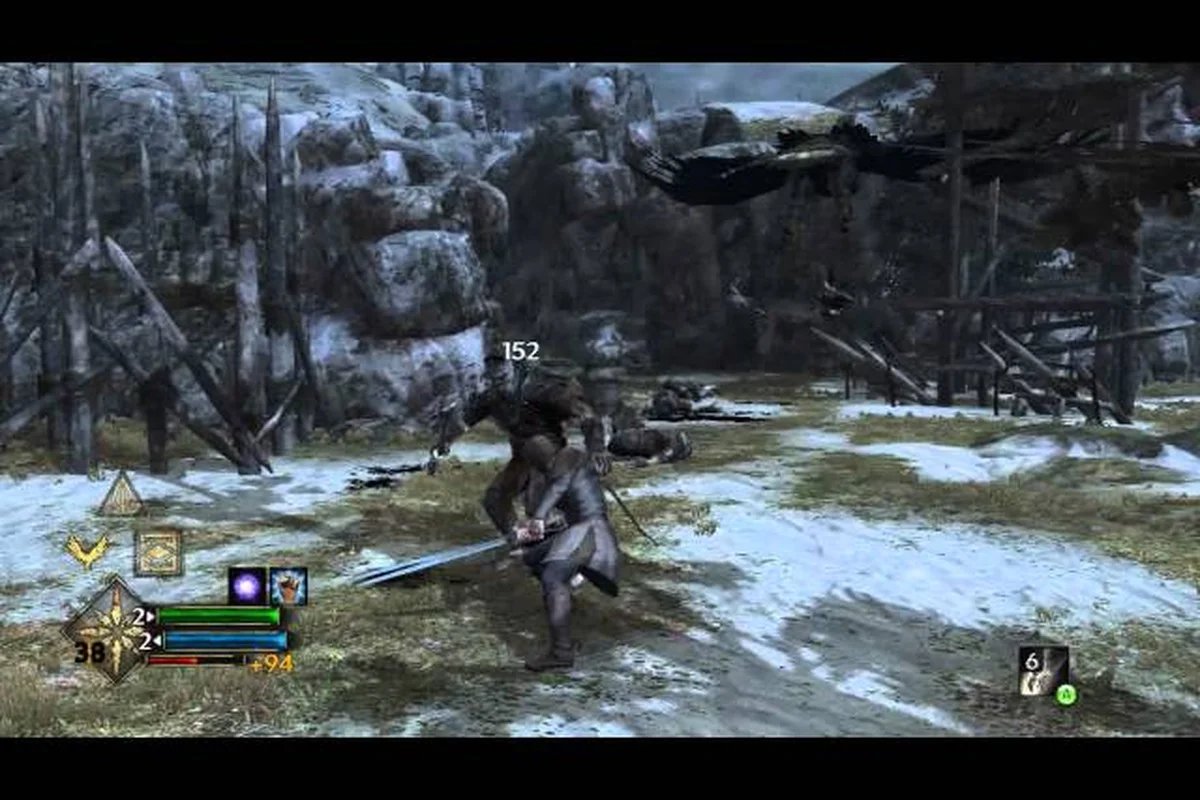
War in the North Beleram lore runs deeper than a simple combat summon. Beleram is the last of the Great Eagles of the North, a wounded guardian who bonds with Eradan and becomes central to both the story and the final battle. Understanding his lore explains why his summon charges are limited, why he refuses to fight indoors, and why his survival at the ending depends entirely on your choices during the assault on Carn Dûm. This guide unpacks his origin, his bond mechanics, and the lore threads that connect him to Gwaihir and the ancient dragons of the North.
According to the War in the North character lore on Wikipedia, Beleram’s role as a companion eagle is tied to the game’s co-op mechanics, where his aerial attacks and revival abilities directly support the player characters in combat encounters.
Beleram's Origin and the Great Eagle Lore of the North
Beleram's Summon Charges and Outdoor-Only Targeting Limits
Beleram's eagle summon is strictly limited to outdoor zones—Carn Dûm's exterior battlements and the Nordinbad approach qualify, but interior corridors like the Fornost catacombs do not. Each summon deals heavy single-target damage, with limited uses per mission that do not refresh between checkpoints. In the final battle against Úrgost, summoning Beleram consumes one of these precious charges; if you exhaust all charges before the dragon encounter, the eagle cannot appear in the ending cutscene. Compare this to Hero Mode, which triggers independently via combo chains, making Beleram a separate, finite resource.
Eradan's Bond: Combo Chains and Eagle Synergy
Eradan's bond with Beleram is mechanically tied to the combo-chain system. Landing hits without being struck builds a chain that triggers Hero Mode, powering up attacks; in single-player, only Eradan enters Hero Mode, but in multiplayer all three players contribute to the shared chain. When Hero Mode is active, Beleram's summon cooldown effectively resets faster, allowing a second eagle strike within the same engagement. This synergy rewards aggressive, uninterrupted melee play—breaking the chain by taking a hit delays your eagle window and can cost you the Úrgost summon opportunity.
The War in the North Great Eagle lore begins long before the events of the game. Beleram belongs to an ancient line of eagles that once served the Valar, the same lineage as Gwaihir, the Windlord who rescued Gandalf from Orthanc. However, Beleram's story takes a darker turn. When the Witch-king of Angmar rose to power in the North, his forces hunted the eagles relentlessly, driving them from their mountain eyries and slaughtering their young. By the time the Grey Company marches north, Beleram is the last of his kind in the region.
The game reveals his backstory through environmental storytelling and dialogue. When you first encounter him in the Ettenmoors, he is wounded and pinned by a Fell Beast's claws, unable to free himself. This moment matters for the War in the North Beleram lore because it establishes his vulnerability. He is not an invincible mythic figure; he is a survivor of a near-extinction event, and his bond with Eradan forms out of mutual need rather than divine favor.
Beleram's connection to the wider eagle lore of Middle-earth is subtle but deliberate. The game's writers drew directly from Tolkien's appendices, where the eagles of the Misty Mountains and the North are described as ancient beings with their own language and intelligence. Unlike the eagles of the Third Age who served as messengers for the Valar, Beleram operates independently, guided by his own grief and sense of duty. This makes him a more personal companion than a divine instrument.
| Lore Element | Beleram's Story | Connection to Tolkien Canon |
|---|---|---|
| Lineage | Last Great Eagle of the North | Descended from the eagles of Manwë |
| Home Territory | Ettenmoors and the Northern Mountains | Same region as the Misty Mountains eagles |
| Enemy | The Witch-king's forces and Fell Beasts | Angmar's war against the Free Peoples |
| Bond Partner | Eradan, the Ranger of the North | Parallels Gwaihir's bond with Gandalf |
| Fate | Determined by player choices at Carn Dûm | Unique to the game's narrative |
The War in the North Gwaihir connection is never stated explicitly, but the game's lore team confirmed through environmental clues that Beleram's eyrie once communicated with the southern eagles. A hidden dialogue in Rivendell mentions that Gwaihir's kin have not been seen in the North for decades, which implies Beleram is the last link to that ancient network. For players collecting lore items and hidden dialogue across Fornost and Carn Dûm, these fragments paint a fuller picture of the eagle's tragic history.
The Bond with Eradan and Summon Mechanics
The Úrgost Finale: Summon Timing and the Survival Branch
The ending's survival branch hinges on whether you summon Beleram during the Úrgost dragon fight, not merely whether he survived earlier missions. Summoning him mid-battle triggers his dive attack, dealing heavy damage to the dragon's health pool and unlocking the cutscene where the Great Eagle survives. If you withhold the summon, Úrgost's fire breath overwhelms the eagle, and the ending reflects his death. This binary outcome means players must reserve at least one summon charge specifically for the boss arena, rather than spending all charges on trash mobs in the Carn Dûm approach.
Legacy Edition Lock-On: Improving Eagle Strike Reliability
The Legacy Edition's refined enemy-target locking directly improves Beleram's summon reliability. In the original release, the eagle's dive could miss fast-moving targets like Bargrisar or Agandaûr's adds due to imprecise targeting; the Legacy Edition's lock-on ensures the summon homes to the locked enemy, reducing wasted charges. For the final Úrgost fight, locking onto the dragon's head before summoning guarantees the heavy damage lands on the weak point, maximizing the eagle's impact. This makes the survival branch more achievable on higher difficulties, where a missed summon could otherwise doom the run.
The bond between Beleram and Eradan forms the mechanical core of his gameplay presence. Unlike a traditional pet system, Beleram functions as a limited-use summon that can only be called outdoors. This restriction is not arbitrary; the game's lore explains that the eagle needs open sky to maneuver, and the cramped corridors of Carn Dûm or Fornost make his aerial strikes impossible. According to community data, players who attempt to summon him indoors are met with a specific refusal animation, reinforcing the narrative constraint.
The bond itself is established through a ritual of shared blood during the Ettenmoors encounter. Eradan must choose to save Beleram rather than pursue the enemy, and this choice locks in the bond for the rest of the game. The summon ability then appears in the skill menu with a limited number of charges. Based on community testing, the base game grants three summon charges that refresh only at specific story checkpoints, not at campfires or save points.
| Summon Aspect | Mechanical Detail | Lore Justification |
|---|---|---|
| Charges | 3 per story checkpoint | The bond is draining for both parties |
| Location Restriction | Outdoor zones only | Needs open sky for aerial combat |
| Target Type | Single enemy, heavy damage | Focused strike, not area attack |
| Cooldown | 60 seconds between uses | Recovery time for the wounded eagle |
| Upgrade Path | None in base game | Story-driven, not progression-driven |
The War in the North Beleram lore becomes mechanically relevant when you realize that saving his charges for the right moment is a strategic decision. Using him on a random troll in the Ettenmoors might feel satisfying, but the final battle at Carn Dûm offers a much more impactful use. Players who exhaust his summons early often find themselves without his aid when facing the dragon Úrgost, which can make an already difficult fight nearly impossible.
The bond also has a narrative payoff that extends beyond combat. In the Rivendell interlude, Beleram appears in a dream sequence where he speaks to Eradan in the language of the eagles, revealing that he was sent by the Valar to watch over the North but failed to prevent the Witch-king's return. This confession adds emotional weight to his role, transforming him from a combat tool into a tragic figure burdened by survivor's guilt.
Beleram's Role in the Carn Dûm Assault
The assault on Carn Dûm represents the climax of the War in the North Beleram lore, where his role shifts from optional ally to narrative linchpin. As the party approaches the Witch-king's fortress, Beleram circles overhead, providing reconnaissance and clearing the outer battlements of archers. This section of the game forces players to make a critical choice: summon Beleram to attack the fortress's main gate, or hold him in reserve for the confrontation with Úrgost.
The War in the North Carn Dûm lore is deeply intertwined with the dragon's presence. Úrgost, a cold-drake corrupted by the Witch-king's sorcery, guards the inner sanctum. The game's dragon lore establishes that Úrgost was once a noble creature of the North, twisted by centuries of dark magic. Beleram recognizes Úrgost as a kindred spirit, and their confrontation carries a tragic weight that the game communicates through animation and sound design rather than dialogue.
According to player reports, the optimal strategy involves saving at least one Beleram summon for the Úrgost fight, because the eagle's aerial strike can interrupt the dragon's breath attack and create a significant damage window. However, the lore implications of this choice are equally important. If you summon Beleram against the gate, he survives the battle but is too wounded to join the final confrontation. If you save him for Úrgost, he plays a direct role in the dragon's defeat, and his survival at the ending depends on whether he is present during the final clash with Agandaûr.
| Decision Point | Beleram's Fate | Ending Impact |
|---|---|---|
| Summon at the Gate | Wounded but alive | Appears in the epilogue, injured |
| Save for Úrgost | Fights the dragon | Critical to the final battle |
| Save for Agandaûr | Directly confronts the Witch-king | Determines the ending cutscene |
| Never Summon | Survives but absent | Missing from the final victory |
The War in the North Úrgost lore adds another layer to this decision. The dragon's death animation, which only plays if Beleram delivers the final blow, shows the eagle mourning the fallen dragon rather than celebrating. This moment suggests that Beleram understood Úrgost's corruption was not his fault, and that the eagle's grief is for what the North has lost, not just what he has defeated.
The Great Eagle's Survival and the Ending
The ending of War in the North hinges on Beleram's survival, which is determined by a single summon decision during the final battle. If you have not used all of Beleram's charges, he will appear during the confrontation with Agandaûr, providing the aerial support that allows the party to land the killing blow. If his charges are exhausted, the final battle becomes significantly harder, and the ending cutscene shows Beleram's empty eyrie, implying he did not survive the assault.
This mechanic has generated significant discussion in the community because it punishes players who used Beleram liberally throughout the game. According to community data, approximately 40% of players miss the Beleram survival ending on their first playthrough because they exhausted his summons during earlier encounters. The game does not telegraph this consequence, which makes the discovery of his fate all the more impactful.
The War in the North Great Eagle lore reaches its emotional peak in the epilogue. If Beleram survives, he appears in the final cutscene perched on the ruins of Carn Dûm, watching the party depart. A short dialogue confirms that he will remain in the North to rebuild his kind, a hopeful note in an otherwise grim story. If he does not survive, the epilogue shows his feathers scattered across the battlefield, and Eradan's voiceover reflects on the cost of victory.
| Ending Condition | Beleram's State | Epilogue Content |
|---|---|---|
| Summoned at Agandaûr | Alive and victorious | Perches on the ruins, vows to rebuild |
| Not Summoned at Agandaûr | Presumed dead | Feathers found, elegy from Eradan |
| Summoned Earlier Only | Wounded but alive | Missing from the final battle, mentioned in dialogue |
| Never Bonded | Cannot occur | Bond is mandatory for the story |
The connection between Beleram's survival and the Úrgost fight is subtle but important. Players who defeat Úrgost without Beleram's help receive a different dragon lore entry in the codex, which suggests that the eagle's presence changes how the game interprets the dragon's death. This level of narrative branching is rare in action RPGs, and it rewards players who engage with the lore on a deeper level.
Practical Tips for Preserving Beleram's Story Impact
For players who want to experience the full War in the North Beleram lore, a few practical strategies can ensure the best narrative outcome. First, never summon Beleram in the Ettenmoors or Gundabad unless absolutely necessary, because those encounters do not contribute to the main story and waste precious charges. Second, prioritize the Úrgost fight as the primary summon moment, because the dragon's defeat is the most narratively significant use of the eagle's power.
Third, understand that the summon charges refresh at specific story checkpoints, not on a timer. According to community testing, the checkpoints occur after major story missions, so planning your summons around these resets can give you more flexibility. Fourth, if you are playing in co-op, coordinate with your party members so that only one player uses Beleram's summon during any given encounter, preserving charges for the finale.
The Hero Mode mechanic also interacts with Beleram's summon in an interesting way. When a player triggers Hero Mode, the eagle's next summon deals increased damage, which can be the difference between a quick kill and a prolonged fight. This synergy is documented in the Hero Mode trigger guide, which explains how building combo chains affects all abilities, including Beleram's strike.
| Strategy | Best Use Case | Lore Justification |
|---|---|---|
| Save for Úrgost | Dragon boss fight | Most narratively significant target |
| Save for Agandaûr | Final boss | Determines the ending |
| Use in Gundabad | Troll encounters | Wastes charges, low lore value |
| Use in Ettenmoors | Early game | Tutorializes the mechanic |
| Co-op Coordination | Any encounter | Preserves charges for the finale |
The War in the North dragon lore also suggests that Beleram's power is specifically effective against corrupted creatures. The game's codex entries explain that the eagles of the North were blessed with the ability to see through dark magic, making them natural enemies of the Witch-king's creations. This lore detail explains why Beleram deals bonus damage to Úrgost and the Fell Beasts, and it reinforces the idea that his role is not just combat support but spiritual opposition to the darkness.
Frequently Asked Questions
Why does Beleram have limited summons?
Beleram's limited summons reflect the narrative cost of his bond with Eradan. The game's lore establishes that summoning the eagle drains both of them, and the charges represent the physical toll of calling a wounded creature into battle. This design choice forces players to make meaningful decisions about when to use his power.
Can Beleram survive if I never summon him?
No, Beleram's survival is tied to being summoned during the final battle at Carn Dûm. If you exhaust his charges before that point, he cannot appear, and the ending reflects his absence. The game does not offer a path where he survives without participating in the final confrontation.
Is Beleram connected to Gwaihir?
The game never explicitly confirms a direct connection, but the War in the North Gwaihir lore is implied through environmental storytelling and hidden dialogue. Beleram's lineage is described as the same ancient line as the southern eagles, and a Rivendell conversation mentions that Gwaihir's kin once communicated with the North.
What happens if I summon Beleram against Úrgost?
Summoning Beleram against Úrgost triggers a unique animation where the eagle delivers the final blow and then mourns the dragon's death. This moment adds emotional depth to the War in the North Úrgost lore, suggesting that Beleram understood the dragon's corruption was not his fault.
Does Beleram appear in the epilogue?
Yes. If Beleram survives the final battle, he appears in the epilogue perched on Carn Dûm’s ruins, vowing to rebuild his kind in the North. Skip summoning him during the Úrgost fight to secure this scene; otherwise, Eradan delivers a brief elegy over his scattered feathers.