
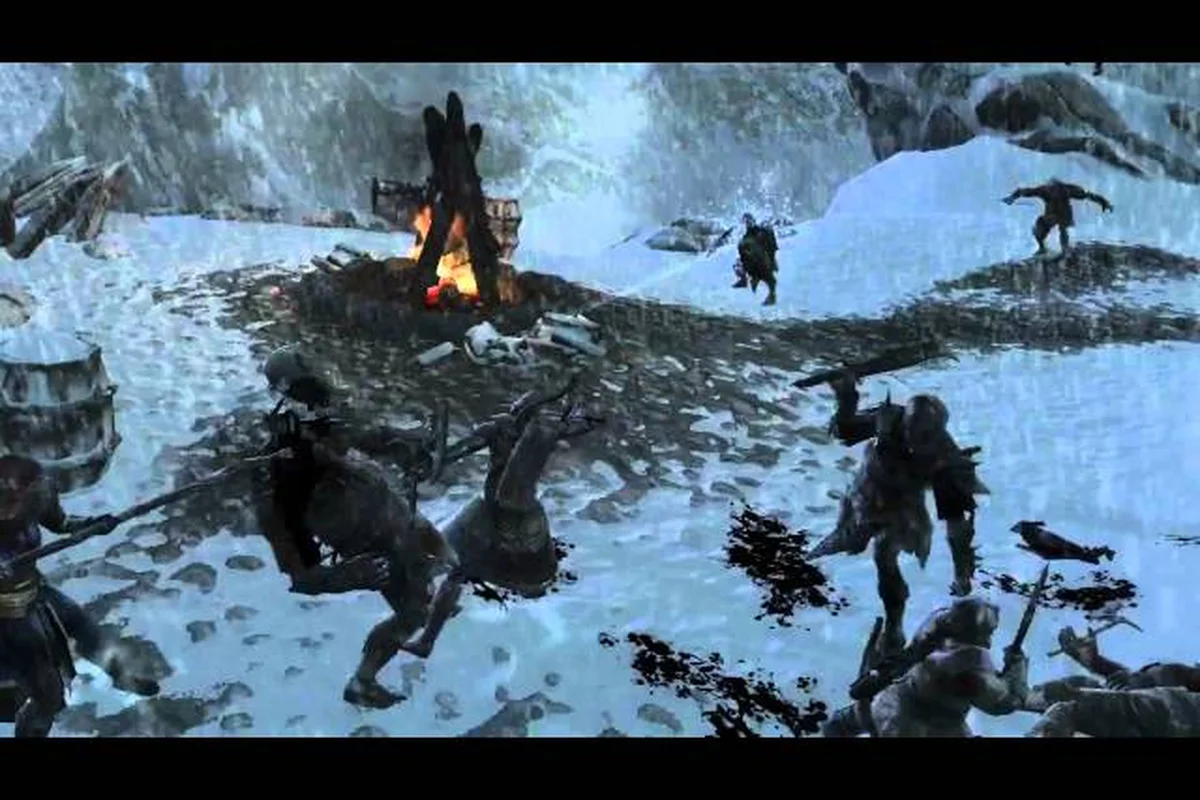
War in the North Gundabad lore sits at the heart of one of the most debated corners of Middle-earth gaming. The 2011 action RPG, now available as the Legacy Edition, pulls its premise directly from a throwaway line in The Return of the King where Gandalf mentions "the war in the north" raging beyond the pages of the novels. Understanding how Mount Gundabad, the Ettenmoors, and the original city of Nordinbad fit into Tolkien's established timeline matters because it separates genuine canon from licensed invention — and that distinction shapes how you read every story beat in the campaign.
The Canon Foundation: Gandalf's Line and Appendix A
Gandalf's "Few Heroes in the North" Line as a Narrative Mandate
The game's premise is built on a single, often-overlooked passage from The Return of the King, where Gandalf mentions "a few heroes in the North" fighting Sauron's forces. This line, combined with Appendix A Part III (Durin's Folk), gave the developers a canonical blank slate. Unlike the film trilogy, Middle-earth Enterprises mandated that heroes remain "decent and kind," which is why the dialogue system features no moral branching—your choices alter tone, not alignment. This constraint directly shaped Agandaûr's role as a purely malevolent foil, ensuring the narrative never compromises the heroes' inherent goodness.
Nordinbad's Originality as a Lore Bridge
Nordinbad stands as the game's most significant original creation, serving as a narrative bridge between the canonical locations of Fornost and Carn Dûm. While the city is not in Tolkien's texts, its placement in the Ettenmoors region is deliberate, providing a hub where the original characters—Eradan, Andriel, and Farin—can interact with canon figures like Elladan and Elrohir. This design choice allows the game to explore the war's impact on common folk without contradicting established lore. Nordinbad's existence is a practical solution to the challenge of inserting player agency into a story where the major outcomes are already predetermined by the novels.
The entire justification for this game rests on two textual pillars from Tolkien's legendarium. The first is Gandalf's remark in The Return of the King about "the war in the north" — a conflict that runs parallel to the events in the novels but never gets detailed on the page. The second is Appendix A Part III (Durin's Folk), which outlines the history of the Dwarves of Erebor and their ancestral ties to Mount Gundabad. Snowblind Studios built the campaign around these fragments, expanding them into a full narrative without contradicting the established timeline.
According to the Wikipedia overview of the game's plot, the developers drew direct inspiration from these sources rather than inventing a parallel universe. That means the game's story continuity runs alongside the novels, filling in gaps rather than rewriting them. The campaign takes place during the same months as the events of The Fellowship of the Ring and The Two Towers, with the heroes fighting in the north while the Fellowship moves south.
This canon approach explains why the game features Elladan and Elrohir, the twin sons of Elrond, alongside Halbarad and other Rangers of the North. These characters exist in the source material, and their presence anchors the story in established lore. The game also includes Gandalf, Aragorn, and the Bagginses in cameo roles, reinforcing the sense that this story happens in the same Middle-earth readers know.
The War in the North story canon question gets more complex when you consider what Middle-earth Enterprises allowed. The licensing body enforced a specific rule: heroes had to remain decent and kind, which eliminated any moral branching in the dialogue system. This constraint actually helps the story continuity because it keeps the tone consistent with Tolkien's themes of hope and perseverance against overwhelming odds.
| Canon Source | What It Provides | How the Game Uses It |
|---|---|---|
| Return of the King (Gandalf's line) | The war in the north as a concept | Full campaign framework |
| Appendix A Part III (Durin's Folk) | Mount Gundabad's Dwarven history | The city as a major location |
| The Fellowship of the Ring | Timeline anchor | Story runs parallel to novel events |
| The Two Towers | Ongoing war context | Campaign midpoint references |
| Unfinished Tales | Additional lore fragments | Background for the Ettenmoors |
Mount Gundabad: From Dwarven Ancestral Home to Orc Stronghold
Mount Gundabad's Strategic Value in the Campaign
Mount Gundabad is not merely a visual set-piece; it functions as the campaign's primary strategic objective because of its control over northern supply lines. In the lore, it was the Dwarven ancestral home before becoming an Orc stronghold, and the game leverages this history to justify its heavily fortified layout. The level's design funnels players through vertical chokepoints, mirroring the difficulty of assaulting a mountain fortress. This contrasts sharply with the open, scavenging-focused Ettenmoors, forcing a shift from resource management to direct, sustained combat against waves of Orc and Goblin defenders.
Agandaûr's Black Númenórean Lineage and Gameplay Mechanics
Agandaûr's identity as a Black Númenórean is more than backstory; it directly informs his combat mechanics and the rewards he drops. His lineage grants him access to ancient, corrupting magic, which manifests in-game as high-damage area-of-effect attacks that inflict a "Cursed" status effect, reducing the target's armor. This forces players to prioritize dodging over tanking, a stark contrast to the physical brawling of bosses like the Gundabad Orc Chieftain. Defeating Agandaûr yields the "Black Númenórean War Mask," a legendary helmet that provides significant resistance to shadow damage, making it a must-have for the Carn Dûm endgame encounters.
Mount Gundabad carries enormous weight in Tolkien's mythology, and the game treats it with the reverence it deserves. The mountain sits at the northern end of the Misty Mountains, and its history stretches back to the awakening of Durin, the eldest of the Seven Fathers of the Dwarves. According to The Silmarillion and related texts, Durin woke beneath Gundabad and established the first Dwarven settlement there, making it the spiritual birthplace of the entire Dwarven race.
That heritage makes the mountain's fall particularly tragic. Over the millennia, Gundabad changed hands multiple times, eventually becoming a stronghold for Orcs and other servants of the Enemy. By the time of the War of the Ring, the mountain had been thoroughly corrupted, serving as a staging ground for Sauron's forces in the north. The game's depiction of Gundabad as an Orc-infested fortress aligns perfectly with this established history.
The War in the North Gundabad lore in the game adds specific details about the mountain's role during the war. The campaign shows Gundabad as a critical military asset for the Enemy, hosting Agandaûr, the game's original antagonist. This Black Númenórean sorcerer operates from the mountain, coordinating attacks across the northern regions. The game's writers created Agandaûr as an original character, but his backstory — a descendant of the Númenóreans who fell to Sauron's influence — fits squarely within established canon.
Players exploring the mountain will notice the layered design: ancient Dwarven architecture buried beneath Orc fortifications. This visual storytelling reinforces the location's history, showing how the Enemy repurposed a sacred site for evil purposes. The Mount Gundabad walkthrough in our campaign guide covers the practical navigation, but the lore layer adds emotional weight to every encounter.
| Gundabad Era | Historical Event | Game Representation |
|---|---|---|
| First Age | Durin awakens beneath the mountain | Referenced in lore items |
| Second Age | Dwarven kingdom flourishes | Ancient architecture visible |
| Third Age (early) | Orcs seize the mountain | Background for the campaign |
| Third Age (late) | Sauron's forces use it as a base | The main fortress in the game |
The Ettenmoors: Tolkien's Troll-Filled Wasteland
The Ettenmoors appear in the novels as a dangerous region east of the Misty Mountains, but the game expands this territory into a full playable area. The name itself comes from the Old English word "eoten," meaning giant or troll, which tells you exactly what kind of enemies you should expect there. Tolkien established the Ettenmoors as a lawless wilderness where trolls and other dark creatures roam freely.
The War in the North Ettenmoors lore builds on this foundation by making the region a key battleground. The game shows the Ettenmoors as a contested zone where the forces of the Enemy move troops and supplies between Gundabad and the southern territories. This strategic positioning makes sense given the region's geography, sitting as it does between the Misty Mountains and the ancient kingdom of Angmar.
One of the most memorable encounters in the Ettenmoors involves the Stone Giant boss fight, a confrontation that pits the heroes against a creature straight out of Tolkien's monster manual. The game's version of the Stone Giant incorporates the Eagle assistance mechanic, where Gwaihir and Beleram swoop in to help turn the tide. This ties directly into the lore of the Great Eagles, who serve as messengers and occasional saviors throughout the legendarium.
The Ettenmoors also serve as the gateway to Nordinbad, the game's original city. This creates an interesting tension between canon and invention: the region itself comes from Tolkien, but the major settlement within it is a Snowblind Studios creation. Understanding this distinction helps players appreciate what the game adds to the mythology versus what it adapts from existing sources.
The region's role in the broader war becomes clearer when you consider the story continuity with the novels. While the Fellowship travels south through Moria and into Lothlórien, the game's heroes fight through the Ettenmoors, preventing Enemy forces from reinforcing their positions further south. This parallel structure reinforces the sense that the game's events matter to the larger conflict, even though they never appear in the books.
Nordinbad: The Original City and Its Place in the Legendarium
Nordinbad represents the game's most significant original contribution to Middle-earth geography. Unlike Gundabad and the Ettenmoors, which Tolkien described in his writings, Nordinbad exists only in the game. The city serves as a major hub in the campaign, hosting Agandaûr's forces and providing a dramatic backdrop for several key battles.
The name itself follows Tolkien's linguistic patterns, combining "nord" (north) with "bad" (a suffix suggesting a fortified place). This linguistic authenticity helps the city feel like it belongs in Middle-earth, even though no such settlement appears in the source material. The game's writers clearly studied Tolkien's naming conventions when creating this location.
The War in the North Nordinbad storyline centers on the city's role as a military stronghold. The game depicts Nordinbad as a recently constructed fortress, built to support the Enemy's northern campaign. This positioning makes narrative sense: Sauron needed forward operating bases to coordinate attacks across the region, and Nordinbad fills that role without contradicting any established geography.
The city's design reflects its purpose. Massive walls, fortified towers, and barracks-style buildings dominate the skyline, with Orc patrols moving through the streets. The Nordinbad walkthrough in our campaign guide details the combat encounters, but the architectural storytelling deserves attention too. Every structure in Nordinbad exists to support military operations, reinforcing the city's function as a staging ground.
| Location | Canon Status | Source Material | Game Role |
|---|---|---|---|
| Mount Gundabad | Canon | Appendix A, The Silmarillion | Major fortress, final areas |
| Ettenmoors | Canon | The Fellowship of the Ring | Playable wilderness region |
| Nordinbad | Original creation | None (game-only) | Major city, story hub |
| Fornost | Canon | Appendix A | Early game location |
| Carn Dûm | Canon | Appendix A | Late game fortress |
Story Continuity: How the Campaign Fits the Timeline
The War in the North story continuity question requires understanding exactly when the campaign takes place. The game's events run parallel to the early chapters of The Fellowship of the Ring, beginning around the time the Fellowship leaves Rivendell. This timing allows the game to reference events from the novels without directly interfering with them.
The campaign's midpoint aligns with the events of The Two Towers, as the war escalates across Middle-earth. The game's heroes fight their way northward toward Gundabad while the Fellowship faces its own trials in the south. This parallel structure creates a sense of shared stakes, even though the two storylines never intersect directly.
The War in the North is War in the North canon debate often comes down to how you define canon. The game's events are not mentioned in Tolkien's writings, so they cannot be considered canon in the strictest sense. However, the game's writers worked within the boundaries of established lore, creating a story that could plausibly have happened alongside the novels. This approach gives the game a canon-adjacent status that satisfies most fans.
Several specific details reinforce this continuity. The game features Gwaihir, the Lord of the Eagles, who plays a role in the novels as well. The presence of Elladan and Elrohir ties the story to Rivendell and the broader Elven resistance. Even the game's original antagonist, Agandaûr, fits the pattern of Black Númenóreans who served Sauron throughout the Third Age.
The Legacy Edition's release has renewed interest in these questions, as a new generation of players discovers the game. The IGN coverage of the Legacy Edition highlights how the game expands Tolkien's legendarium with the untold story of the northern war. This framing — "untold story" rather than "alternate story" — captures the game's approach to canon.
The Black Númenórean Connection: Agandaûr's Lore Roots
Agandaûr serves as the game's primary antagonist, and his backstory draws heavily from Tolkien's writings about the Black Númenóreans. These are descendants of the Númenóreans who fell under Sauron's influence during the Second Age, rejecting the friendship of the Elves and the Valar. The game's portrayal of Agandaûr as a sorcerer of considerable power fits this archetype perfectly.
The Black Númenórean tradition includes figures like the Mouth of Sauron, who appears in The Return of the King. These characters typically serve as commanders and agents of Sauron, wielding both military and magical authority. Agandaûr follows this pattern, operating as a regional commander who coordinates the Enemy's forces in the north.
What makes Agandaûr interesting from a lore perspective is his connection to Mount Gundabad. The game establishes that he has established his base there, using the mountain's strategic position to control the surrounding regions. This choice makes sense given Gundabad's history as a Dwarven stronghold that fell to the Enemy — a location with both strategic and symbolic value.
The game's portrayal of Agandaûr also touches on the theme of corruption and fall, which runs throughout Tolkien's work. Like Saruman and Denethor, Agandaûr represents a figure who once had noble potential but chose the path of darkness. The game's writers give him enough depth to feel like a genuine threat rather than a cartoon villain, even if his motivations remain relatively straightforward.
For a deeper look at Agandaûr's backstory and the Black Númenórean lore, check our dedicated lore guide which examines the character's origins and role in the campaign.
Practical Lore Applications: What This Means for Players
Understanding the lore behind the game's locations and characters enhances the experience in practical ways. When you know that Mount Gundabad was once a sacred Dwarven site, the Orc fortifications feel more tragic. When you recognize the Ettenmoors as a troll-infested wilderness from the novels, the enemy variety makes more sense. This contextual knowledge transforms the campaign from a generic action RPG into a meaningful journey through Middle-earth.
The lore also affects gameplay decisions. Knowing that Beleram the Great Eagle has ties to the broader Eagle mythology helps you appreciate the summon mechanic. Understanding that Carn Dûm was the Witch-king's capital adds weight to the late-game battles. These connections reward players who engage with the source material.
For collectors, the lore items scattered throughout the campaign offer additional context. The Gundabad collectibles in our collectibles guide include scrolls and artifacts that flesh out the region's history. These items provide background information that enriches the main story without requiring external research.
| Lore Element | Gameplay Impact | Story Payoff |
|---|---|---|
| Gundabad's Dwarven history | Environmental storytelling | Emotional weight to battles |
| Ettenmoors troll population | Enemy variety | Connection to novel lore |
| Nordinbad's military purpose | Level design | Clear narrative stakes |
| Agandaûr's Black Númenórean roots | Boss characterization | Thematic depth |
| Beleram's Eagle connection | Summon mechanic | Mythological resonance |
The War in the North story canon ultimately comes down to intent. The game's developers clearly respected Tolkien's work, building their story within the boundaries of established lore. While the specific events of the campaign never appear in the novels, they could plausibly have happened without contradicting anything Tolkien wrote. That's the highest compliment a licensed adaptation can receive.
What do you think about the game's approach to canon? Do you consider the events of the campaign part of Middle-earth's history, or do you draw a hard line between Tolkien's writings and licensed adaptations? Share your perspective in the comments below.
Frequently Asked Questions
Is War in the North considered canon in Tolkien's legendarium?
The game's specific events are not mentioned in Tolkien's writings, so they cannot be considered canon in the strictest sense. However, the game's writers worked within established lore boundaries, creating a story that fits alongside the novels without contradicting them. Most fans treat it as canon-adjacent, meaning it could plausibly have happened.
How does Mount Gundabad's history affect the game's story?
Mount Gundabad was the site where Durin, the eldest of the Seven Fathers of the Dwarves, first awoke. This makes it a sacred ancestral site that fell to Orc control over the ages. The game uses this history to add emotional weight, showing the Enemy's corruption of a once-holy Dwarven location.
What is Nordinbad and why isn't it in the books?
Nordinbad is an original city created by the game's developers, not found in Tolkien's writings. It serves as a military stronghold for Agandaûr's forces, providing a forward operating base for the Enemy's northern campaign. The name follows Tolkien's linguistic patterns, helping it feel authentic despite being an invention.
Does the game's timeline match the events of the novels?
Yes, the campaign runs parallel to the early chapters of The Fellowship of the Ring and extends into the timeframe of The Two Towers. The game's heroes fight in the north while the Fellowship travels south, creating a sense of shared stakes without directly intersecting with the novel's events.
Are the Ettenmoors accurately portrayed compared to the books?
The Ettenmoors appear in the novels as a dangerous troll-infested wilderness east of the Misty Mountains. The game expands this into a full playable region, maintaining the troll population and dangerous atmosphere while adding original content like the Stone Giant boss encounter and the city of Nordinbad.